
Plan the cleaning task, user sequence and site together
Assess commercial dog wash stations and helmet-service equipment as distinct operating projects, with model-specific evidence and local responsibilities.
Two distinct projects within this directory
The cleaning equipment scope here covers commercial dog wash stations and helmet-service machines. These routes have different users, processes, materials and site requirements. Review the requirements of each service separately before deciding which equipment belongs at your site.
Choose the operating task before comparing units. Describe what the customer does, what the machine is expected to do and how the operator provides help. A self-service interface does not mean that a process needs no supervision, replenishment or maintenance.
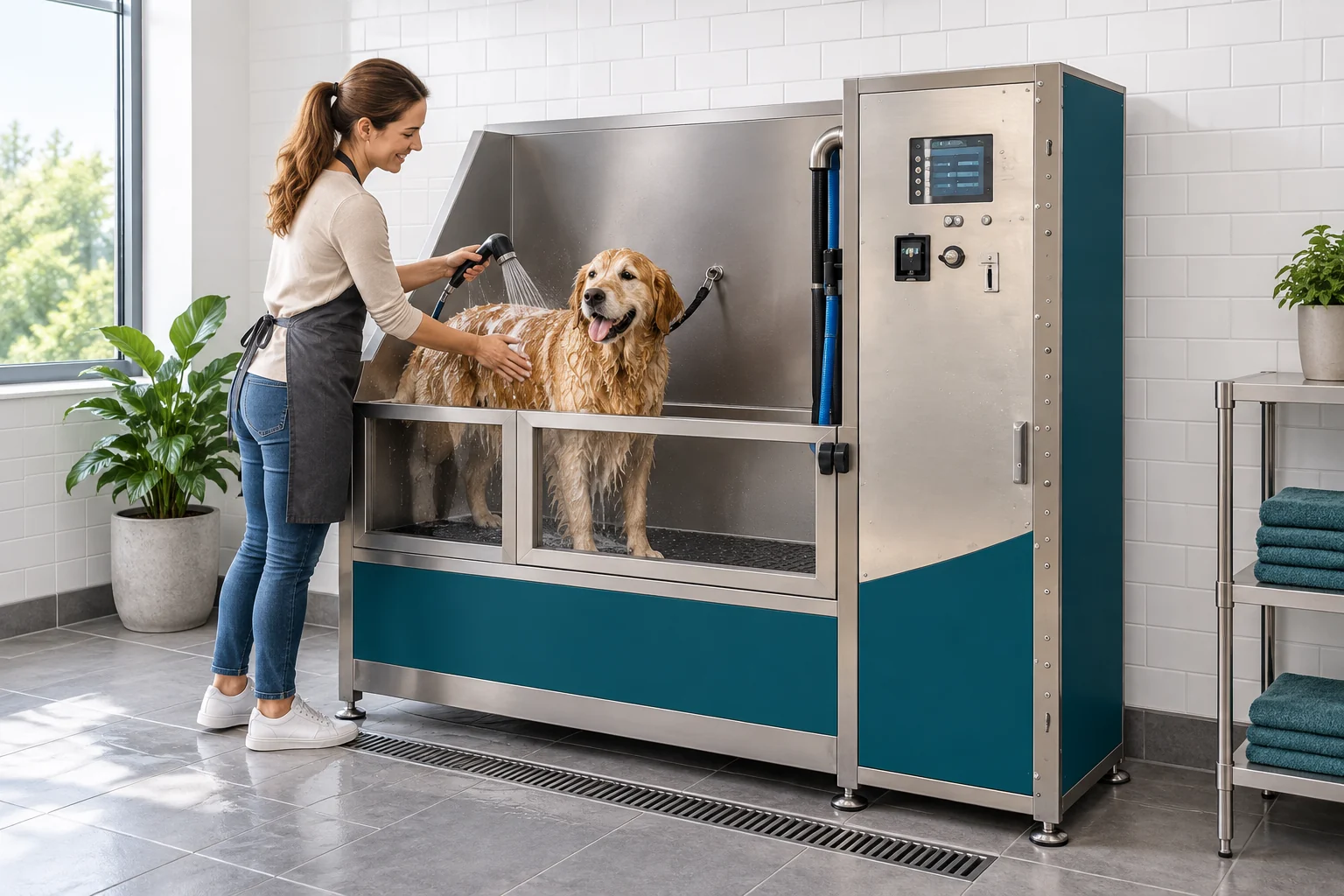
Dog washing starts with an owner-operated sequence
The dog wash route begins with the owner guiding the animal and operating the wash functions. It is not an assumed enclosed, fully automatic animal-washing system. Review how a session starts, how functions are selected and how the user stops or requests assistance.
The site assessment needs model-specific information for the installation, drainage, cleaning and routine operation. Ask for a complete demonstration and document the relevant controls and limits. A helmet-machine demonstration or a general cleaning claim provides no evidence about this separate animal-handling process.
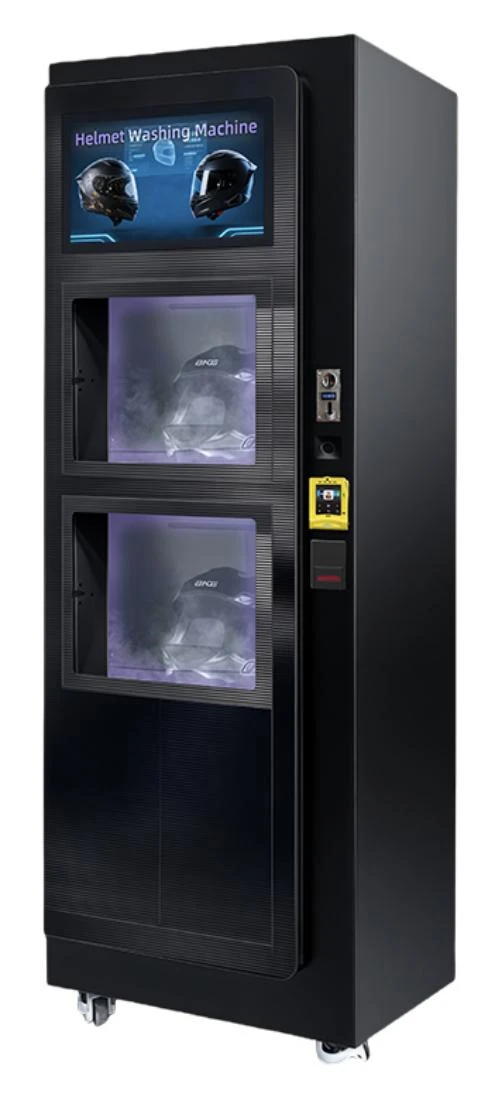
Helmet equipment needs process and material evidence
For a helmet project, distinguish cleaning, odour treatment, drying and disinfection. Record which outcomes are claimed, the actual process and the evidence supporting each one. Provide representative helmet sizes and materials and agree how the proposed configuration will be assessed.
For a location offering helmet care alongside other services, review the shared layout and utilities while keeping each machine’s process and material evidence separate. Ask for model-specific tests covering the helmets and treatment outcomes required for your project.
A shared site still needs separate responsibility plans
When several self-service machines share a location, assess their access, customer movement, utilities and maintenance requirements individually. Identify the local operator for replenishment, cleaning, fault reporting and help during an interrupted service. Do not assume that the support or installation arrangement for one machine covers the others.
For each proposed unit, request the appropriate drawings and operating documents and identify the work that requires local qualified support. The project should record unresolved site questions before equipment configurations are compared as if they were ready for installation.
Use a pilot to resolve defined questions
A pilot brief should name the site, country, unit count, operating task and the evidence needed before further purchasing. Define the customer sequence, local responsibilities and the acceptance observations that matter. These inputs make a trial reviewable without promising a particular level of demand or return.
Select the relevant category below and provide the basic requirements first. Contact us on WhatsApp to discuss your equipment requirements. Configuration, process evidence, payment, packing and support remain subject to the written project review; starting a conversation does not confirm supply or an accepted order.