

SEALED PACKS. SELF-SERVICE DISCOVERY.
Trading Card Vending Machines for Packaged TCG Products
Measure packs, boxes and protected singles in their final sale packaging, then inspect the complete delivery path. Bending, catching, compression and a collision with the collection surface are the condition risks to inspect. A released product can still have damage that makes it unacceptable for sale.
For operators, commercial sites and equipment distributors.
Share your machine configuration and operating requirements with our team.
Explore the details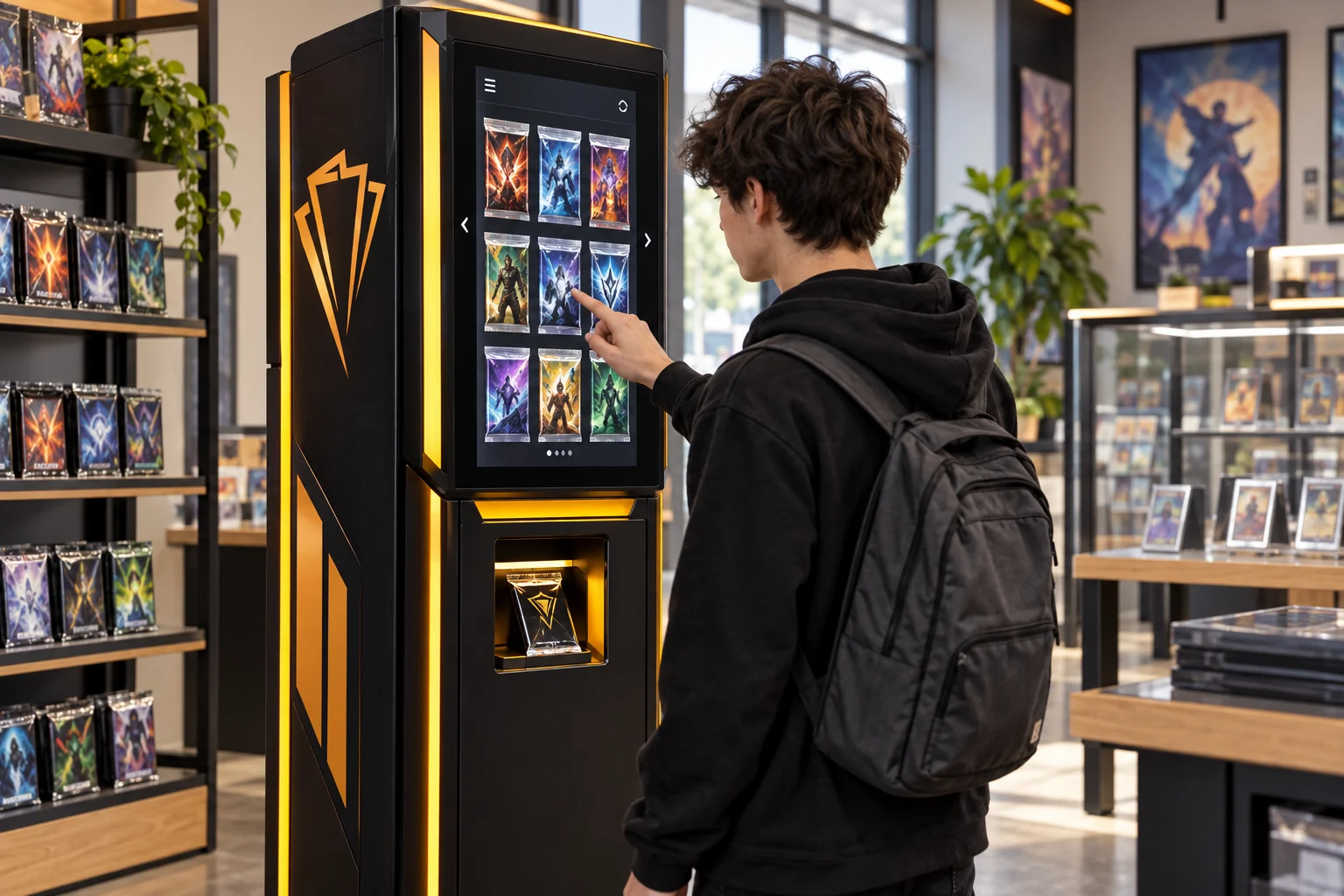
POKÉMON TCG VENDING
Pokémon Card Vending Machines for SalePlan your next TCG retail project.
Explore vending configurations for sealed Pokémon booster packs and trading card collectibles. Compare pack dimensions, protective packaging and dispensing layouts, then discuss the equipment for your location.
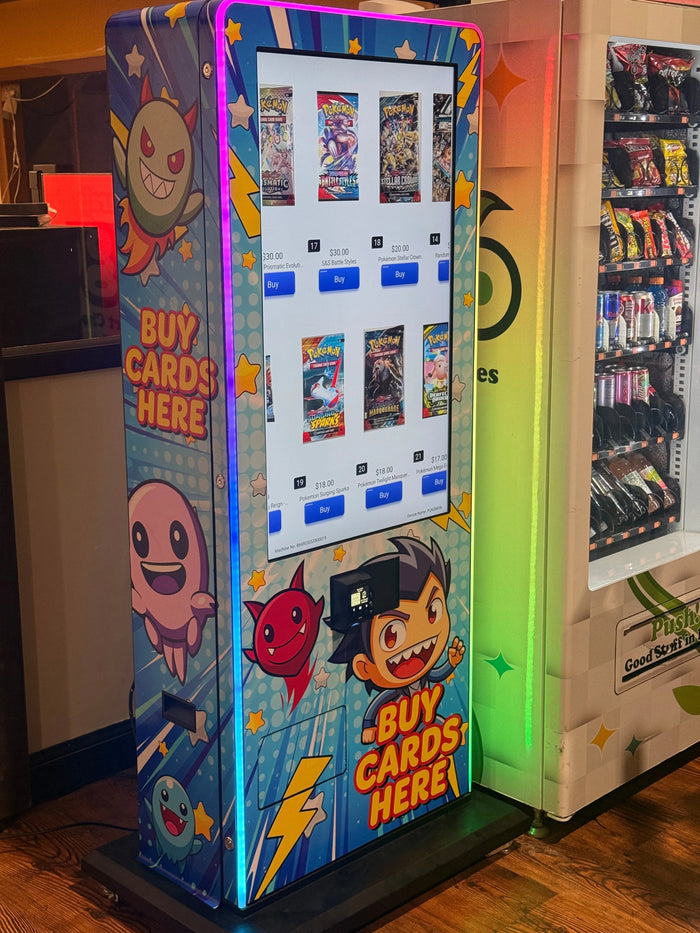
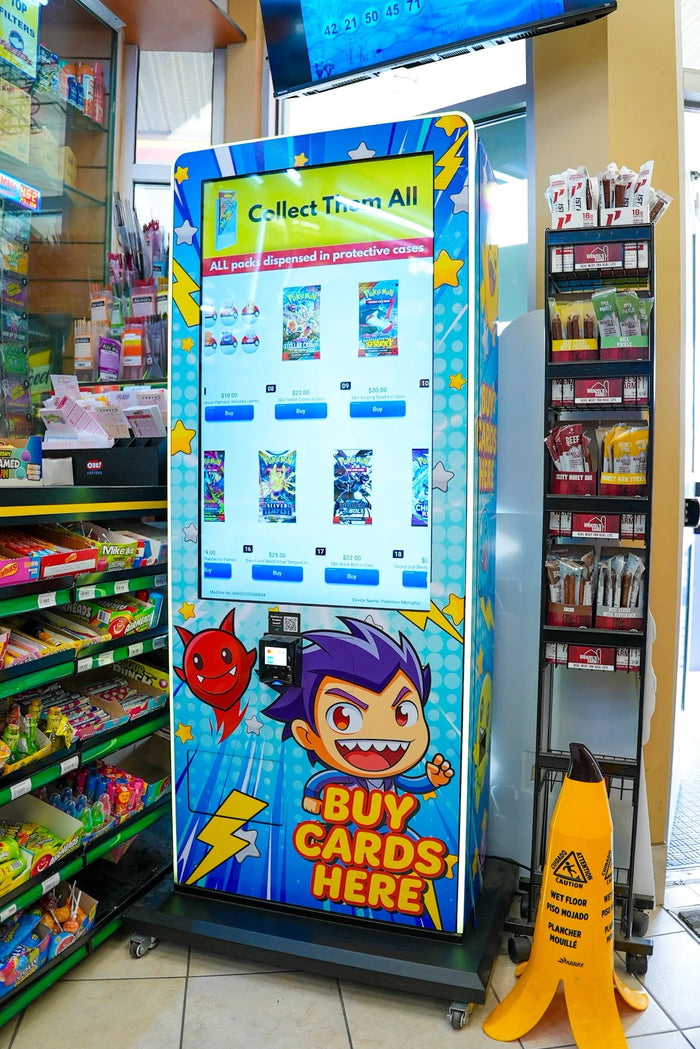
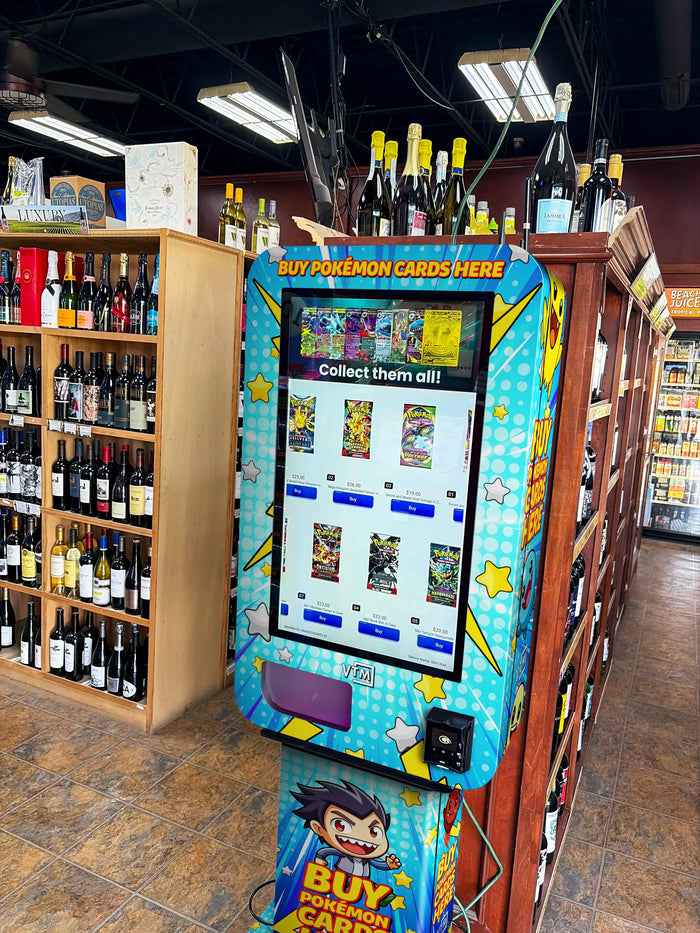
Installation reference scenes. Equipment configuration and availability require confirmation for your project.
- Packaged TCG assortment
- Protective delivery tests
- Clear purchase experience
FROM IDEA TO CONFIGURATION
Build a card retail experience around the pack.
- Choose the pack or box
- Test selection and delivery
- Plan stock and customer support
POSSIBLE SETTINGS
Card and hobby shops
Sports facilities
Retail and entertainment venues
01
Card Packs, Boxes & Protected Singles
Trading cards, TCG products and sports cards are considered within this category rather than separate equipment types. The first question is the sale unit: a sealed pack, a box or a protected single item. Begin with legitimately sourced, packaged goods and a defined selling format. Equipment compatibility and merchandise rights need separate review.
Trading Card Packaging & Dispensing Compatibility — Check trading card packs, boxes and protected cards for machine fit, reliable collection and packaging condition using representative samples.
Trading Card Vending Acceptance Tests — Plan trading card vending acceptance tests for product delivery, packaging condition, failed transactions and documented corrective actions.
Project review sequence
02
Packaging Dimensions & Dispensing Options
Measure each sale unit with its final sleeve, protector or outer packaging. Record width, height, thickness, weight and any flexible or protruding edges. Include packaging variation between products rather than relying on one representative dimension for the whole assortment. Use real samples to assess the proposed channel, compartment or delivery mechanism. A heavier box or a protected single is tested on its own measured pack.
Pack, box and protected-single measurements
- A. Width of the final sale packaging
- B. Height of the final sale packaging
- C. Thickness of the final sale packaging
- D. Flexible or protruding edge
- E. Weight of that sale unit
Machine Factory Acceptance Test Checklist — Use a factory acceptance checklist to record the machine, samples, customer cycles, payment exceptions, handover records and assigned repeat checks.
03
Protect Product Condition During Delivery
Observe the full delivery path, including release, any drop or transfer and removal from the collection area. Examine the packaging and item condition before and after repeated cycles. Record bending, catching, compression and collisions with the collection surface. If a different delivery mechanism or protective package is proposed after a failed test, repeat the relevant checks with that combination. A compatibility conclusion applies only to the tested sale packaging and equipment combination.
04
Payments, Failed Vends & Security
Ask how the proposed configuration connects a payment to the actual product release. Review the customer and operator experience when an item does not dispense, when a transaction is cancelled and when a refund requires intervention. Keep payment-provider responsibilities separate from the machine's own detection and reporting. Protection against theft or tampering for that installation and operating environment is defined in the project brief.
05
Stocking, Display & IP Boundaries
Identify who purchases stock, verifies its source, replenishes the machine and controls product descriptions. Ask how stock changes are reflected in the display and how sold-out items are handled. The displayed item should correspond to the product actually loaded in that selection. Review permission for cabinet graphics, product photographs and brand references. Supplying a vending cabinet is not the same as granting a merchandise licence or an official card-brand relationship. Record these responsibilities separately in the project scope.
06
Request a Packaging Compatibility Test
Provide the installation country and site, expected machine quantity and a list of the products to be tested. Describe each sale unit and its protective packaging, along with the condition requirements that matter to your customers. The resulting assessment should identify the tested combination and its limits before equipment configuration or pricing is confirmed.
Frequently asked questions
If the protective sleeve changes, does the sale unit need to be tested again?
Yes. Measure the new sleeve or protector as the final sale unit, including width, height, thickness, weight and any flexible or protruding edge. Fit and acceptance checks are revisited when the packaging, supplier or product format changes, instead of treating the same product name as the same sale unit. If a different protective package is proposed, repeat the release, transfer and collection checks for that combination. An observation from the previous sleeve stays with that sample.
Does the artwork on a trading card mean the machine has official authorisation?
No. Official authorisation, product authenticity and permission to reproduce artwork come from the rights holder for that card brand. Supplying a vending cabinet is separate from a merchandise licence or an official card-brand relationship. Review permission for cabinet graphics, product photographs and brand references, and record those responsibilities in the project scope.
Does a successful pack release mean the pack was delivered without damage?
No. A released product can still have damage that makes it unacceptable for sale. Inspect the packaging and the item before and after the delivery path, and record bending, catching, compression and collisions with the collection surface. The acceptance record pairs the item collected with its condition before and after release. Product release alone is not the condition result for that sample and configuration.