

HELMET CLEANING SERIES
Plan Helmet Cleaning Alongside Other Self-Service Equipment
Assess helmet cleaning within a multi-service site: layout, shared facilities, user assistance and separate equipment evidence before selecting a configuration.
For operators, commercial sites and equipment distributors.
Our equipment range
Five cabinet formats for your site
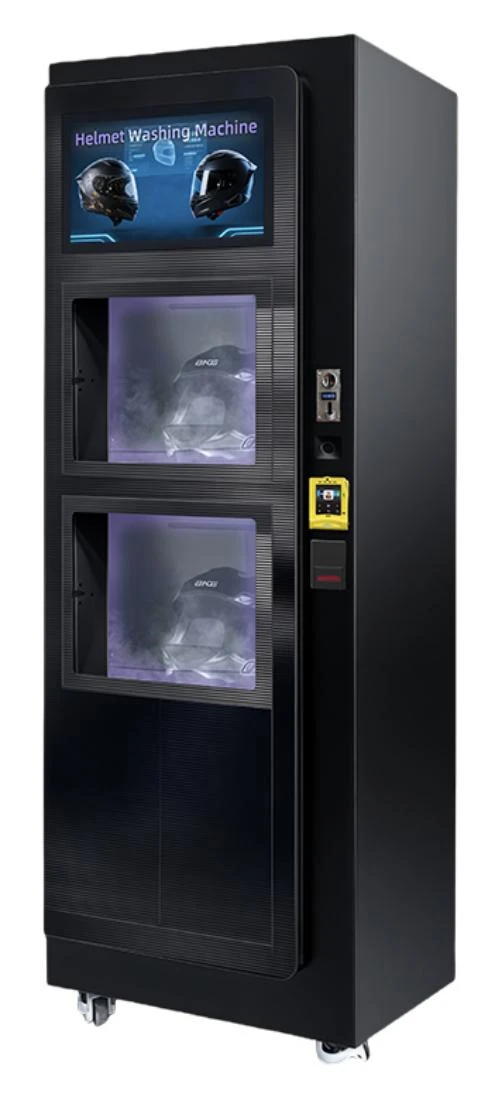
Choose a single helmet bay, two stacked or side-by-side bays, or a three-compartment cabinet. The desktop WX-F75 offers a smaller format. Each helmet compartment holds one helmet.
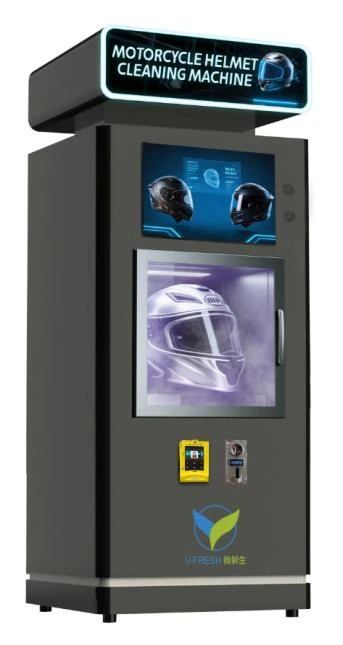
WX-F69
Single helmet compartment
- Helmet compartments
- 1
- Dimensions (H × W × D)
- 1,850 × 650 × 560 mm
- Net weight
- Approx. 114 kg
- Display
- 21.5-inch touchscreen
Inner chamber: 370 × 450 × 470 mm (H × W × D).
WX-F70
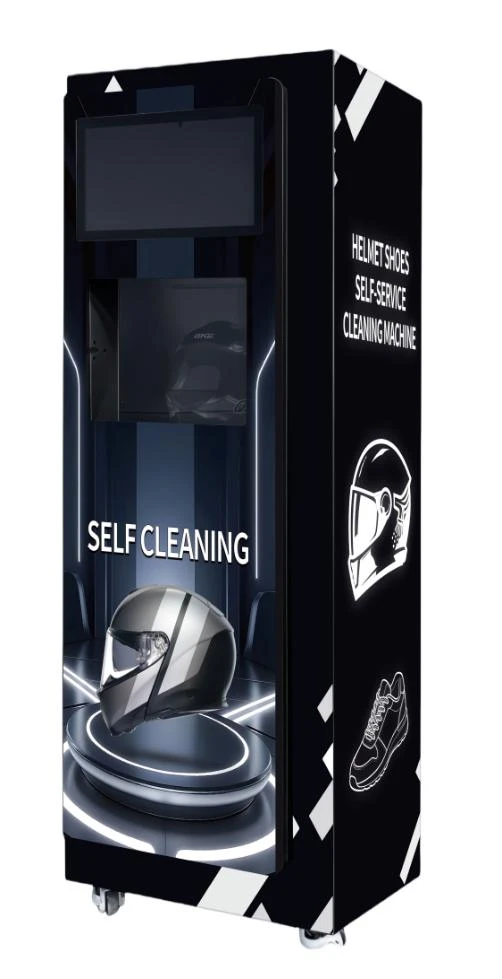
Two stacked helmet compartments
- Helmet compartments
- 2
- Dimensions (H × W × D)
- Height to confirm × 640 × 530 mm
- Net weight
- Approx. 124 kg
- Display
- 21.5-inch touchscreen
The brochure table lists 1,870 mm height; its drawing labels 1,800 mm. Confirm the installation drawing before site work.
WX-F71
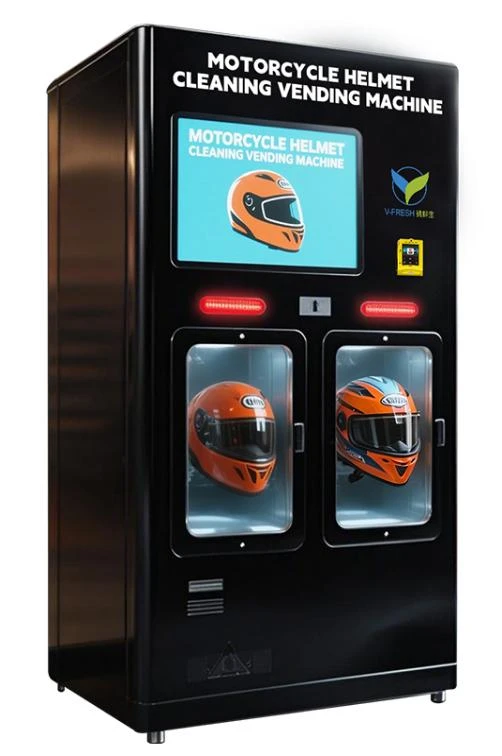
Two side-by-side helmet compartments
- Helmet compartments
- 2
- Dimensions (H × W × D)
- 1,800 × 1,120 × 560 mm
- Net weight
- Approx. 150 kg
- Display
- 21.5-inch touchscreen
Two helmet doors in a wider floor-standing cabinet.
WX-F72
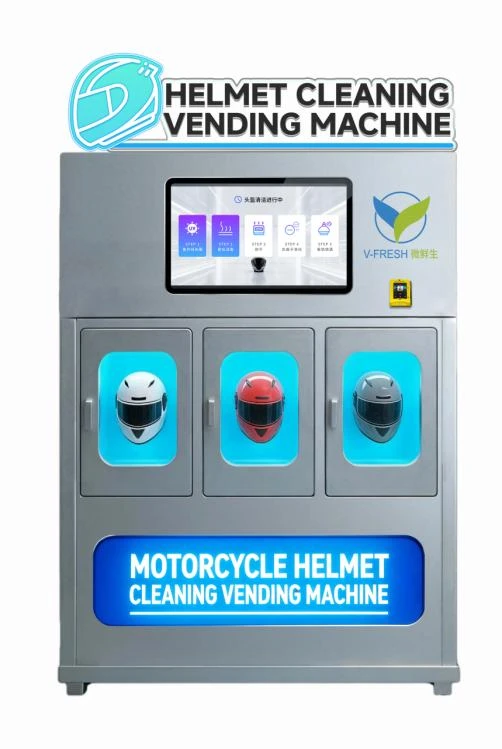
Three helmet compartments
- Helmet compartments
- 3
- Dimensions (H × W × D)
- 1,800 × 1,680 × 560 mm
- Net weight
- Approx. 200 kg
- Display
- 21.5-inch touchscreen
Three helmet positions across a wide cabinet.
WX-F75
Desktop single helmet compartment
- Helmet compartments
- 1
- Dimensions (H × W × D)
- 980 × 560 × 620 mm
- Net weight
- Approx. 40 kg
- Display
- 15.6-inch touchscreen
Desktop format: include a suitable support surface in the site plan.
Cleaning, fragrance and vending configurations
WX-F69, WX-F70, WX-F71 and WX-F72 each have three configurations. Select the functions your site needs.
Base model
Helmet cleaning with the chamber count and display listed above.
-1 fragrance variant
Adds fragrance spraying for helmets and a separate body-fragrance function.
-2 perfume-vending variant
Adds four perfume-vending lanes, with approximately 20 × 125 ml bottles as listed in the presentation. Check fit with your bottle samples.
Payments and interface
Card-reader support with banknote, coin and change options by configuration. Discuss local payment requirements, interface languages and your screen content.
Connected operation
The introduction describes equipment-status monitoring, inventory, orders and operating alerts through an IoT backend. Agree the included functions and connectivity for your project.
Original machine visuals and specifications from our product presentation. Confirm the selected model’s installation drawing, electrical requirements, finish and current commercial terms with your quotation.
Ask about a model- 1, 2 or 3 helmet compartments
- Touchscreen service selection
- Fragrance and vending variants
FROM IDEA TO CONFIGURATION
Choose the helmet cabinet that fits your site.
- Choose a cabinet and chamber layout
- Select payment and fragrance options
- Confirm installation and service requirements
POSSIBLE SETTINGS
Fleet depots & rental counters
Motorcycle workshops
Fuel & parking service points
01
Where Helmet Cleaning Fits in a Self-Service Site
Assess helmet cleaning machines for operators who are planning several services at one commercial location. Begin with the site plan: show where helmet handover, collection and waiting would sit alongside vending, washing or other activities. Check whether users can reach each service without obstructing another queue, an entrance or the route used for replenishment.
Compare the demands of each service separately before combining them. A dog wash station, a vending machine and a helmet unit do not share the same material, cleaning or supply evidence. Identify which staff, access routes and utility connections could be shared and which require separate provision; confirm the actual loads and installation conditions for each proposed model.
02
What the Machine Actually Does
Request a step-by-step description of the proposed process. Cleaning, odour treatment, drying and disinfection are different claims and should not be used interchangeably. Record what the supplier says the machine does, the operating sequence and the evidence supplied for each claimed outcome.
At this stage, no treatment performance is established by the category listing. Do not interpret a cabinet demonstration as proof of disinfection or compatibility with every helmet. Any additional claim must be evaluated against the actual process, materials and test evidence.
03
Choose a Standard Configuration
Prepare a site responsibility list alongside each machine specification. Identify who manages customer assistance, refunds, item retrieval, replenishment, cleaning and fault escalation for each service. A common site operator does not establish a common payment account, remote dashboard or maintenance contract. Ask which integrations are documented and which would require separate work.
For the helmet unit itself, confirm the chamber arrangement, controls, display language, power supply and payment configuration in its own technical sheet. Treat fragrance dispensing or another requested function as a separate requirement. Do not assume that an option available on a neighbouring machine can be transferred to this one.
04
Demonstration, Acceptance & Materials
Build a sample list showing helmet dimensions, shell and lining materials and any accessories that may affect handling. Ask the proposed supplier to identify restrictions and demonstrate the agreed process using representative samples. Record the observed result and the acceptance criteria before drawing conclusions.
Review those machine and material limits separately from the shared site plan. A layout that provides enough waiting space does not establish treatment performance, and a successful equipment demonstration does not establish that the proposed handover and assistance arrangements will work at your location. Record both sets of acceptance questions for the pilot.
05
Packaging, Support & Quote Scope
Request a quotation for the actual chamber, control, electrical and payment configuration. The scope should identify packing dimensions and weight, transport terms, installation responsibilities, documentation and any agreed spare parts. An informal price discussed for another unit is not a current offer for your project.
Clarify the support contact process, the part-identification method and the distinction between remote assistance and local labour. Warranty coverage, exclusions and shipping responsibilities belong in the written agreement, not in a general statement about the equipment category.
06
Discuss a Pilot Site or Multi-Site Rollout
For a combined-service pilot, record the location, country, proposed equipment mix and the person responsible for each operating task. State the observations that would support a rollout decision: user access, waiting and collection space, interruption handling, maintenance access and the impact of one service being unavailable. Measure each service independently before combining its costs or results with the rest of the site.
Contact us on WhatsApp with the site layout and equipment mix to discuss the coordination questions and model-specific evidence still needed. A discussion does not confirm machine performance, supply readiness or an accepted order. Specialist helmet specifications remain a separate review from the overall site plan.
LET’S REVIEW YOUR PROJECT
Review your configuration
Share your equipment requirements, location, quantity and operating arrangements.