

INDUSTRIAL SUPPLY AT THE POINT OF USE
PPE & Industrial Supply Vending Machines
Define controlled PPE and consumable dispensing needs, including employee access, issue records and replenishment. Submit an integration brief.
For operators assessing equipment, site requirements and local support.
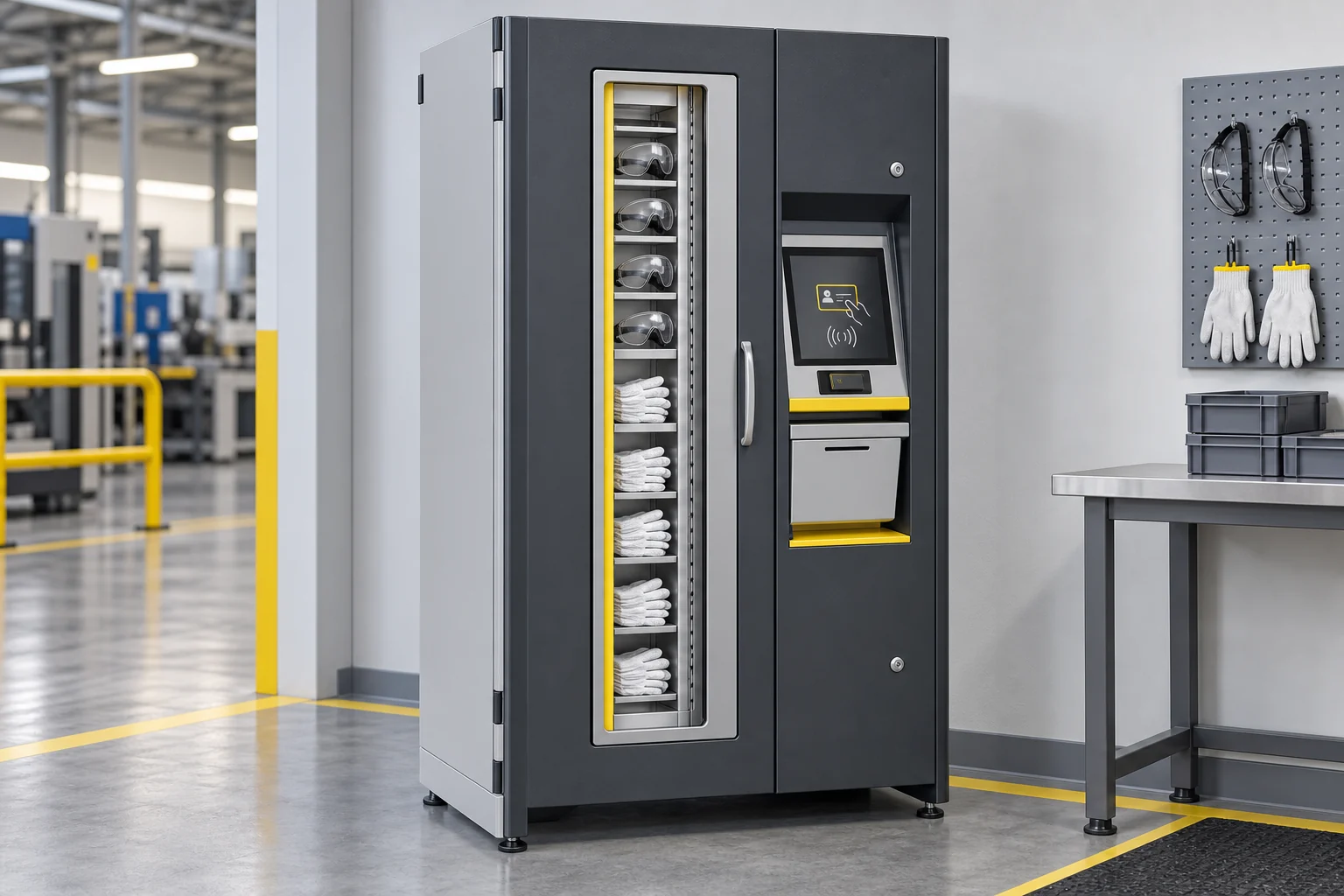
- Item-by-item fit
- Employee access rules
- Replenishment workflow
FROM IDEA TO CONFIGURATION
Put the right supplies closer to the work.
- Map items and users
- Define issue and return rules
- Validate records and system interfaces
POSSIBLE SETTINGS
Factory work areas
Maintenance stores
Industrial distribution projects
01
Retail Vending vs Controlled Employee Dispensing
First decide whether users will buy products or collect supplies under an employer's authorisation. Retail payment and controlled employee dispensing have different identification, reporting and exception requirements. Charging a user is not the same as applying an employee allowance or recording an issue against a department.
Describe the intended workflow from identification to product collection. Include visitors, temporary staff and the person authorised to handle exceptions. This brief establishes the required process; it does not confirm that a proposed machine already implements those rules.
02
Match PPE, Tools and Consumable Packaging
Prepare a list of PPE, tools and consumables in their actual issue packaging. Record dimensions, weight, rigidity, hanging features and whether an item is issued singly or as a pack. Gloves in a box, a flexible mask packet and a boxed tool may require different handling.
Ask for a sample-based comparison of channels, compartments or other proposed release methods. Include the collection opening and return-to-service procedure after a jam. No general cabinet description proves compatibility with every tool or package on the list.
03
Employee Access, Limits & Cost Centres
Define the proposed identity source and the rules for each user group. State which items may be collected, any quantity or time limits, how cost centres are assigned and what should happen when a user needs an exception. Identify who can administer these rules.
Request a demonstration using representative identities and policy scenarios. Test the denied and exception paths as well as a successful issue. A reader fitted to a cabinet does not by itself establish access control, quotas or integration with your existing identity system.
04
Issue Logs, Replenishment & Integrations
Specify the issue-log fields you need: the user reference, item, quantity, time, machine and any department or cost allocation. Describe how replenishment is recorded, who checks low stock and how discrepancies are investigated. Avoid assuming that a displayed inventory count matches the physical stock without a reconciliation process.
List required exports or system interfaces separately. An ERP connection needs a documented interface, ownership and test scope. The presence of a network connection is not evidence that your business system can already exchange data with the machine.
05
Hardware Supply vs Managed Service Scope
Separate equipment purchase from software licences, identity integration, implementation work, replenishment and ongoing support. Identify which tasks your organisation will operate and which services you are asking a supplier to provide. A hardware sourcing enquiry does not establish a managed inventory contract.
The written scope should specify accounts, data access, interface maintenance and responsibility for changes to either system. Ask for a clear list of included functions and unresolved requirements before comparing prices from proposals that may cover substantially different services.
06
Submit an Industrial Dispensing Brief
Submit the installation country, site count, employee scale, main consumables and the intended retail or employee-issue model. Include the identity system and any interface requirements, plus the team responsible for replenishment and administration. Describe the pilot population if the project begins with a limited rollout.
Start the WhatsApp conversation with a summary of the consumables list, employee access workflow and required reporting. Agree which samples or interface documents are needed before exchanging detailed project material. Do not submit employee records, access credentials or production system secrets.
LET’S REVIEW YOUR PROJECT
Build your project brief
Describe the operating route, expected demand, site utilities, destination and local support arrangements.