

COFFEE WITHIN THE DAILY ROUTINE
Coffee Vending Machine Configuration Assessment
Review standard coffee vending requirements for your site. Specify beverage format, water, ingredients and cleaning support for feasibility review.
For operators assessing equipment, site requirements and local support.
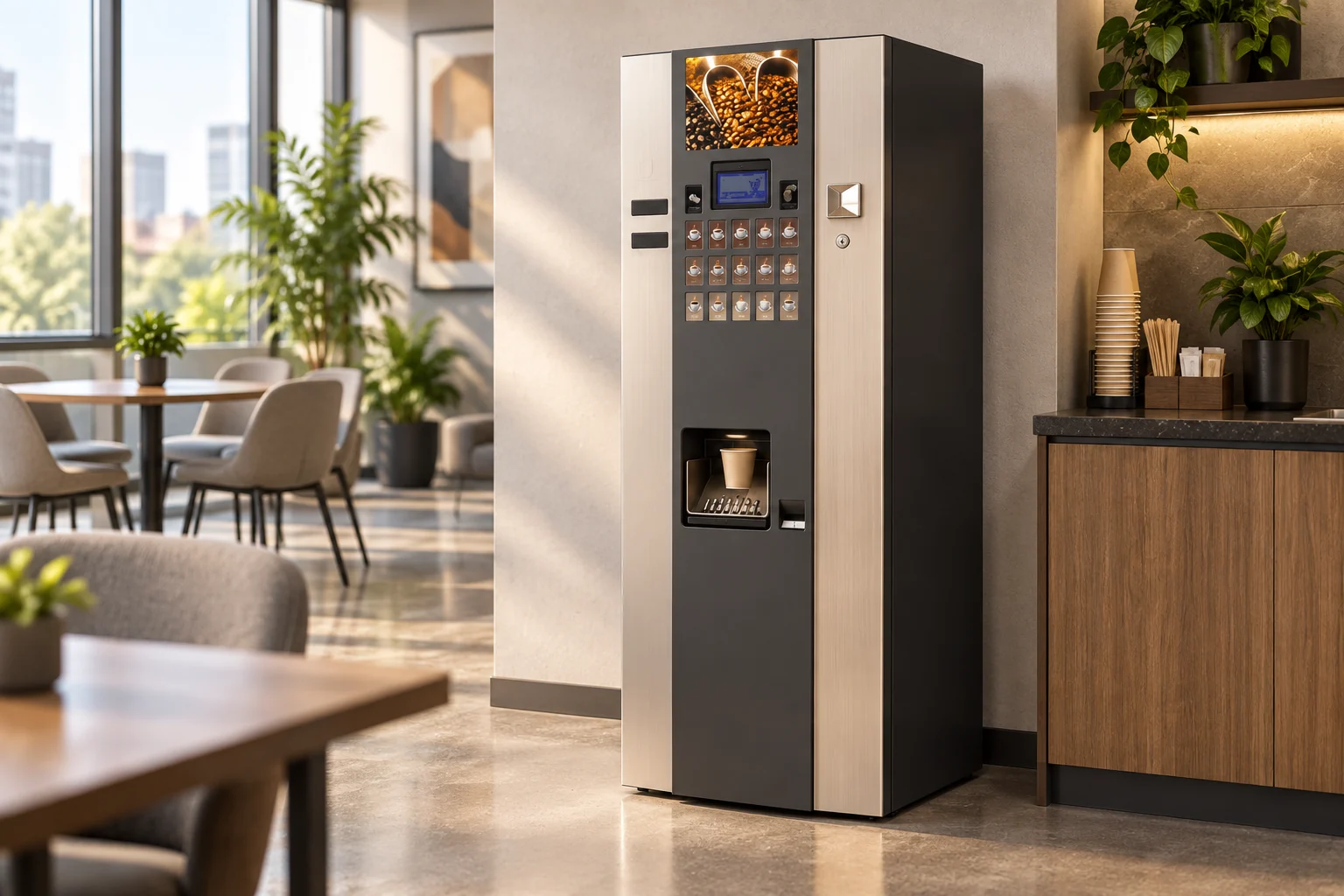
- Menu-led selection
- Water and ingredient fit
- Daily service access
POSSIBLE SETTINGS
Office common areas
Campus buildings
Commercial waiting areas
FROM IDEA TO CONFIGURATION
Start with the cup your customers want.
- Define the drink menu
- Match cups, water and ingredients
- Review cleaning and refill tasks
01
Standard Vending Formats and Drink Menus
Start by choosing a standard beverage-vending route and the menu you intend to offer. Distinguish instant-ingredient preparation from bean-to-cup operation and identify any other preparation requirement explicitly. A robotic coffee kiosk is a separate development or sourcing question, not an assumed starting configuration.
Request an operating demonstration for the proposed menu on the actual model. The presence of a coffee label or screen menu does not prove that every recipe, cup size or ingredient combination is supported by the equipment being offered.
02
Water, Ingredients & Cups
Describe the available water arrangement, cups, coffee and any milk or other ingredients you intend to use. Ask the supplier to identify the compatible consumables and the boundary between the machine and any external water equipment. Record how each item is loaded, monitored and replaced.
Test representative drinks with the proposed supplies rather than assuming that an alternative ingredient or cup will behave the same way. Include storage, replenishment and waste-handling responsibilities in the assessment. Compatibility and product quality remain tied to the actual configuration and operating conditions.
03
Cleaning and Daily Operator Tasks
Identify the local people who will replenish ingredients, empty waste, clean the equipment and check readiness for service. Ask for the model-specific instructions and a demonstration of the routine operator tasks. The operating plan should show how those tasks fit the venue's staffing and access arrangements.
Do not assume that automated drink preparation eliminates daily work. Separate routine tasks from repairs or adjustments that require qualified support. This page does not prescribe a cleaning method or schedule; the applicable equipment documentation and site requirements must guide the final plan.
04
Payment, Placement & Service Access
Provide the site layout, available electrical supply, network arrangement and access for service panels and consumable loading. Clarify how the customer queues, selects a drink and collects it without blocking routine access. A machine footprint alone is not enough to assess the installation.
Identify the operating country, merchant and preferred payment methods. Review the outcome when payment succeeds but the drink is not completed, including what the customer sees and who handles the exception. Payment onboarding and service support need an explicit place in the scope.
05
Evidence Required for a Configuration Quote
Request a model-specific specification, demonstration of the proposed menu, consumable information and the relevant installation and operating documents. Review temperature-related controls and fault protection through the supplier's evidence rather than inferring them from the finished beverage. Identify the local review required for the intended operation.
A quotation should distinguish equipment, options, water arrangements, payment, consumables, transport and service. Unverified menu or operating requirements remain assessment items. This page does not confirm a machine price, local approval or a guaranteed volume of sales.
06
Submit Your Coffee Vending Brief
Submit the country, venue, quantity plan, menu and intended operating pattern. Identify the local team responsible for cleaning and replenishment and describe your water and ingredient supply arrangements. If you are evaluating a pilot, state what it needs to prove before a wider purchase.
Discuss space, power, network and payment preferences on WhatsApp. Agree which site drawings, beverage ingredients, consumable samples or supporting documents are needed to review preparation, cleaning and daily service responsibilities. The next step is to compare the proposed standard configuration with the evidence needed for your site.
LET’S REVIEW YOUR PROJECT
Build your project brief
Describe the operating route, expected demand, site utilities, destination and local support arrangements.