

A SWEET MOMENT, MADE IN VIEW
Cotton Candy Vending Machines: Feasibility Review
Assess cotton candy vending by the complete production cycle, consumables and on-site maintenance capability. Treating a single preparation-step time in seconds as full-day capacity underestimates payment collection, pickup and downtime.
For operators assessing equipment, site requirements and local support.
Share your machine configuration and operating requirements with our team.
Explore the details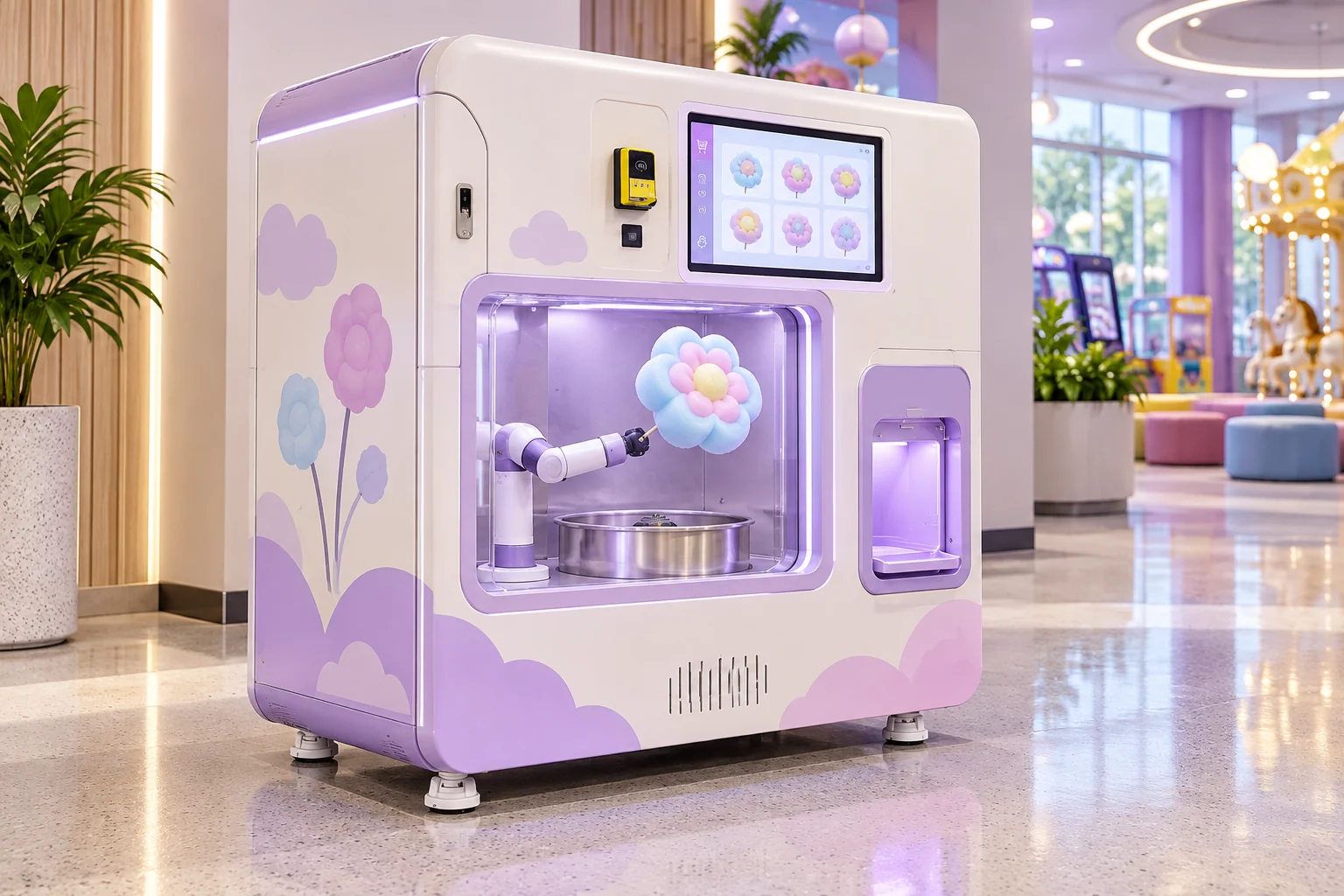
- Visible making process
- Shape and cycle review
- Consumable planning
FROM IDEA TO CONFIGURATION
Make the making part of the experience.
- Choose the intended candy format
- Watch repeated production cycles
- Plan sugar, sticks and daily care
POSSIBLE SETTINGS
Family entertainment centres
Shopping destinations
Indoor visitor attractions
01
Automated Cotton Candy, Including Flower Shapes
This category concerns equipment that prepares cotton candy for a customer at a commercial site. For flower-shaped cotton candy, specify the patterns, portion sizes and presentation you want to test. Check which options the proposed machine can produce and how customers select them.
Cotton Candy Vending Acceptance Tests — Use the acceptance-test scope when a flower-shape video still needs consecutive customer cycles, interruptions and operator handover before it counts as repeat production.
Project review sequence
02
Production Cycle and Continuous Operation
Map the sequence from customer selection and payment through preparation and collection. Observe consecutive cycles with the proposed consumables and record the conditions, completed products, rejected results and operator interventions. Throughput for a full operating day is the result recorded for that model and the consecutive-cycle test.
The record below separates that full customer cycle from the preparation step. Enter completed products, failed products, intervention and conditions from the demonstration. Leave speed and any food-operation approval as buyer inputs until the offered documents state them. The acceptance-tests page publishes the consecutive-cycle scope, including ingredients, shortages, recovery and operator handover. The cleaning and consumables page publishes consumable references, replenishment, cleaning and service records tied to the model instructions. This record prepares the purchase. It is not a finished measured acceptance run and it is not a service commitment.
Cotton Candy Vending Acceptance Tests — Use the consecutive-cycle record when a preparation-step time is being compared with a full operating day.
Cotton Candy Vending Cleaning & Consumables — Use the published consumable, replenishment and cleaning scope when the cycle record names sugar, sticks or service before a trial on the offered model.
Schematic: payment to collection
03
Sugar, Sticks & Consumable Supply
Request the specifications for sugar, sticks and any other consumables used by the proposed model. Identify approved sourcing routes, storage requirements and the instructions for replenishment. Clarify whether the process depends on proprietary items or particular material properties. Test the actual consumables planned for your site, including the desired output formats. Each alternative consumable is tested against the proposed model before it is approved.
Cotton Candy Vending Cleaning & Consumables — Match a sugar, stick or other substitute to the model consumable and cleaning instructions before that alternative is approved.
04
Cleaning, Heat & Local Operation
Ask for the model's cleaning instructions, service-access requirements and documentation covering hot parts and electrical operation. The proposed location also needs review for its environmental and operating conditions. Do not infer that preparation behind a cabinet window removes the need for an operating and cleaning plan. Use the selected equipment’s cleaning instructions and review site suitability with the responsible local team.
05
Verification Before a Sales Offer
Before a sales offer is treated as complete, identify the model, included output formats, payment setup and consumables that have been demonstrated. Record the evidence for repeated operation, interruptions and maintenance, as well as the documentation needed for the intended market and site. We define preparation, food-operation and installation checks in the project plan and assign the responsible teams. The project proposal identifies the selected configuration and price; acceptance records tie output checks to the actual materials and operating conditions.
Supply and fit stay with that offered configuration and the consumables demonstrated for it. Repeat production follows the consecutive-cycle record. Full-day throughput is that recorded result. An approved consumable follows a trial of that material on the proposed model.
Payment Options & Country Compatibility Review — Review payment options for the destination country and merchant, including provider setup, completed cycles, exceptions and refunds, when the offer names a payment setup.
06
Submit Your Location and Operating Plan
Provide the operating country, venue, expected unit count and purchasing window. Describe intended usage, the output formats you want and who will replenish consumables, clean the equipment and respond to faults. Begin with written requirements and agree which images, consumable specifications or samples will help assess the proposed preparation process. We use the project brief to define the selected shapes, sample-check sequence and equipment configuration before agreeing production and delivery.
Frequently asked questions
Can one flower-shape video prove repeat production?
No. A flower-shape video shows one presented result. This page asks for a complete demonstration of the proposed configuration, from order to collection, and for a record of repeated operation, interruptions and maintenance. The acceptance-tests page keeps a promotional clip separate from acceptance evidence and records consecutive customer cycles, including interruptions and operator intervention.
Does an advertised making time equal full-day capacity?
No. This page treats throughput for a full operating day as the result recorded for that model and the consecutive-cycle test. A preparation-step time in seconds leaves out payment collection, pickup and downtime. The acceptance-tests page does not treat one completed item as a sustained capacity, and a quoted performance figure needs its stated conditions and supporting evidence for the offered configuration.
Can materials be substituted freely?
No. This page asks for the sugar, stick and other consumable specifications of the proposed model, including whether the process depends on proprietary items or particular material properties. Each alternative is tested on that model before it is approved. The acceptance-tests page records the ingredients and sticks with the offered model and the intended customer sequence.