

POPCORN FOR THE LEISURE MOMENT
Popcorn Vending Machine Project Assessment
Choose packaged popcorn or on-site preparation before assessing the complete customer cycle. Choosing the wrong route can omit ingredient, heat, ventilation and cleaning work.
For operators assessing equipment, site requirements and local support.
Share your machine configuration and operating requirements with our team.
Explore the details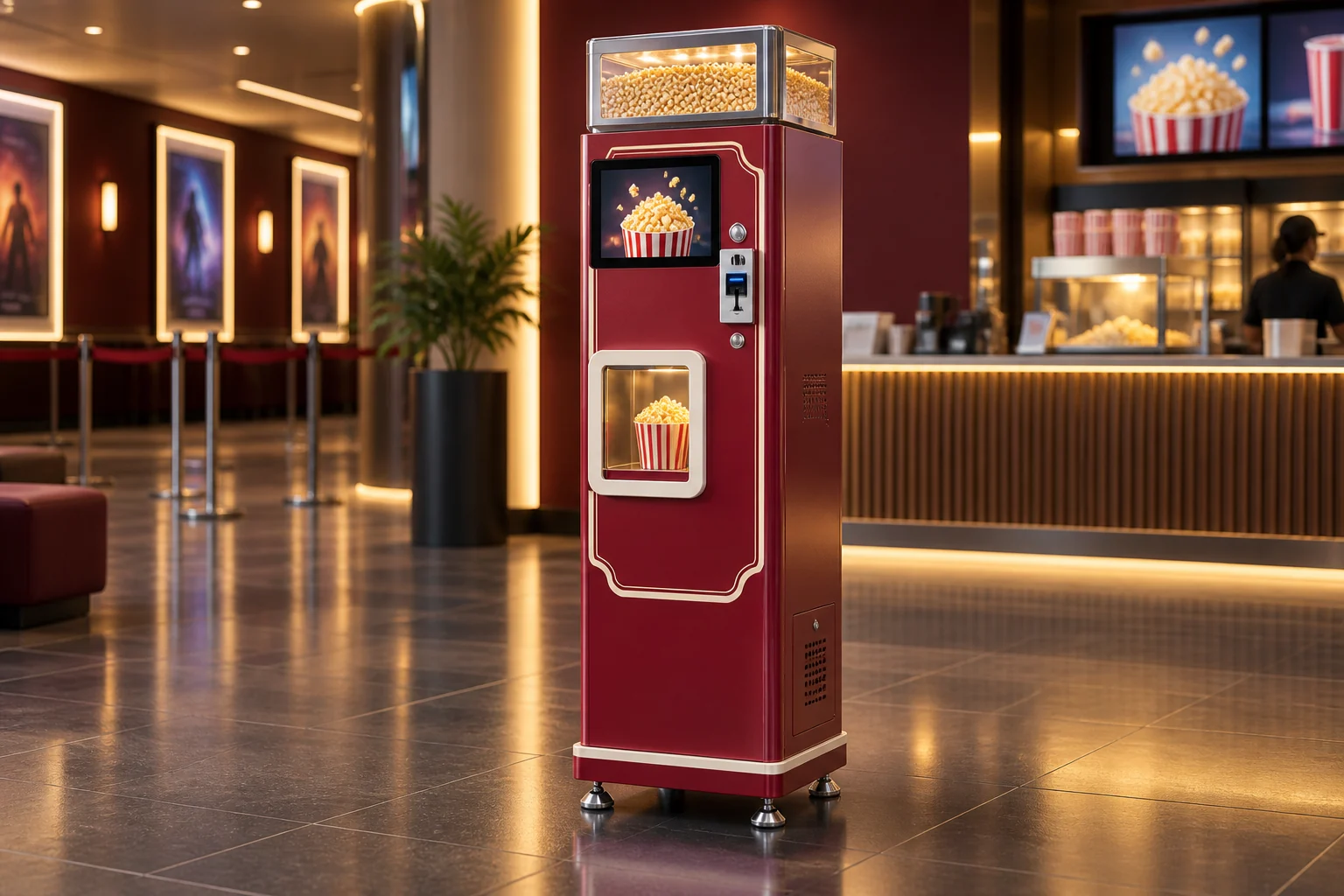
- Fresh or packaged route
- Portion and cup matching
- Heat and cleaning review
FROM IDEA TO CONFIGURATION
Bring the popcorn stop into your venue plan.
- Choose the serving format
- Test preparation and collection
- Plan ingredients and cleaning
POSSIBLE SETTINGS
Cinema and arcade foyers
Family leisure centres
Indoor visitor attractions
01
Packaged Retail vs Fresh Popcorn Preparation
Choose between selling pre-packaged popcorn and preparing or heating popcorn at the point of sale. Packaged vending is a product-release task; fresh preparation adds ingredient handling, a production sequence and additional local operating requirements. We define the selected preparation process, ingredients and acceptance checks in the project specification before agreeing production and delivery. Specify which route any demonstration video actually represents.
Applicable scope: compare packaged release with on-site preparation. A demonstration or document applies only to the route, materials and file it records. Heat, ventilation, cleaning and the qualified local assessment stay with the preparation route that requires them.
Popcorn Vending Maintenance Checklist — Next record after the route is chosen. Packaged release uses the tested sale unit and loading arrangement. On-site preparation uses the ingredients, output packaging and cleaning instructions for that configuration.
Packaged release and on-site preparation
02
Ingredients, Packaging & Portion Format
For packaged retail, describe the bag, cup or other final sale unit and provide its dimensions and weight. For preparation, identify the intended ingredients, seasonings, serving format and consumables. Keep the input materials and finished portion requirements connected in the product list. Ask which materials are documented for the proposed equipment and how they are replenished. A machine demonstration with a different package or ingredient set should not be treated as proof of compatibility with your own assortment.
03
Production or Dispensing Reliability
Build the test around the chosen route. For packaged goods, observe repeated release and collection with representative sale units. For preparation, follow the complete sequence from order through production and collection, recording rejected output, interruptions and operator intervention. Include missing stock or ingredients and unsuccessful paid sessions in the review. Neither an isolated successful cycle nor the speed of one component establishes sustained operating performance for the project.
Payment Options & Country Compatibility Review — Next step when a paid cycle is part of the test. For packaged release or on-site preparation, record the country, the merchant, a completed cycle and a charge with no completed delivery.
04
Heat, Ventilation & Cleaning
For an on-site preparation route, request the actual model's information on heat, ventilation, cleaning and access for maintenance. Describe the proposed site and the local personnel who will operate and service the equipment. These requirements cannot be inferred from a cabinet photograph or a packaged-vending specification. Use the selected machine’s cleaning procedure and review destination requirements with the responsible local team. The applicable documentation and qualified local assessment are needed before installation and operation are agreed.
Site Preparation & Installation Responsibilities — Next site step for the selected route. Heated on-site preparation needs its own ventilation and utility review. Packaged release is assessed on that route’s requirements, not the preparation values.
05
Configuration and Site Verification
Identify the model, route, compatible materials and required utilities before treating a quotation as a complete offer. Request the demonstration records, operating documents, exception handling and support arrangements needed for the proposed site. Assign the required configuration checks and acceptance records to the project plan. The project proposal identifies the preparation configuration, price and delivery schedule.
06
Submit a Popcorn Vending Brief
Submit the operating country, site, packaged or preparation route, quantity plan and purchasing window. For a pilot, explain which compatibility and operating questions must be resolved before rollout. Start with written details and agree which packaging samples, ingredient information or site drawings are needed for the selected operating route. Our engineering team uses these inputs to prepare the equipment configuration and project proposal.
Frequently asked questions
If the packaging changes, does the release record need to be repeated?
Treat the new bag, cup or other sale unit as its own record. Note its dimensions, weight and loading arrangement, and observe repeated release and collection with that unit. A demonstration of a different package is not the compatibility record for the changed one. Keep the packaging change, and any change made before the next observation, on the review. A new sale unit needs that review rather than entering the machine because it looks similar.
Can an on-site preparation demonstration and a packaged-sale demonstration be used for each other?
No. Name the route the demonstration actually shows. A packaged-sale demonstration covers release and collection of that sale unit. An on-site preparation demonstration covers ingredients through production and collection. Heat, ventilation and cleaning for preparation are not read from a packaged-vending specification or a cabinet photograph. Cleaning and inspection follow the instructions for the packaged-release or on-site preparation route that was recorded.
Who handles a shortage of packages or ingredients?
Name the local people who replenish the packaged sale units or the preparation ingredients and who check the conditions in the supporting documents. Missing stock or ingredients, and an unsuccessful paid session, stay in the operating review. A shortage observation stays inside the documented procedure, without creating a hazardous fault or bypassing protections. The payment review separately names who handles a charge with no completed delivery.