

Packaging, Freight & Delivery Planning
Cabinet dimensions are not the shipping package dimensions. Enter packing dimensions, gross weight and package count from the actual packing record, using the unit that record already uses. Receiving and handling use those inputs. Installation is a separate line, included only when the delivery scope names it.
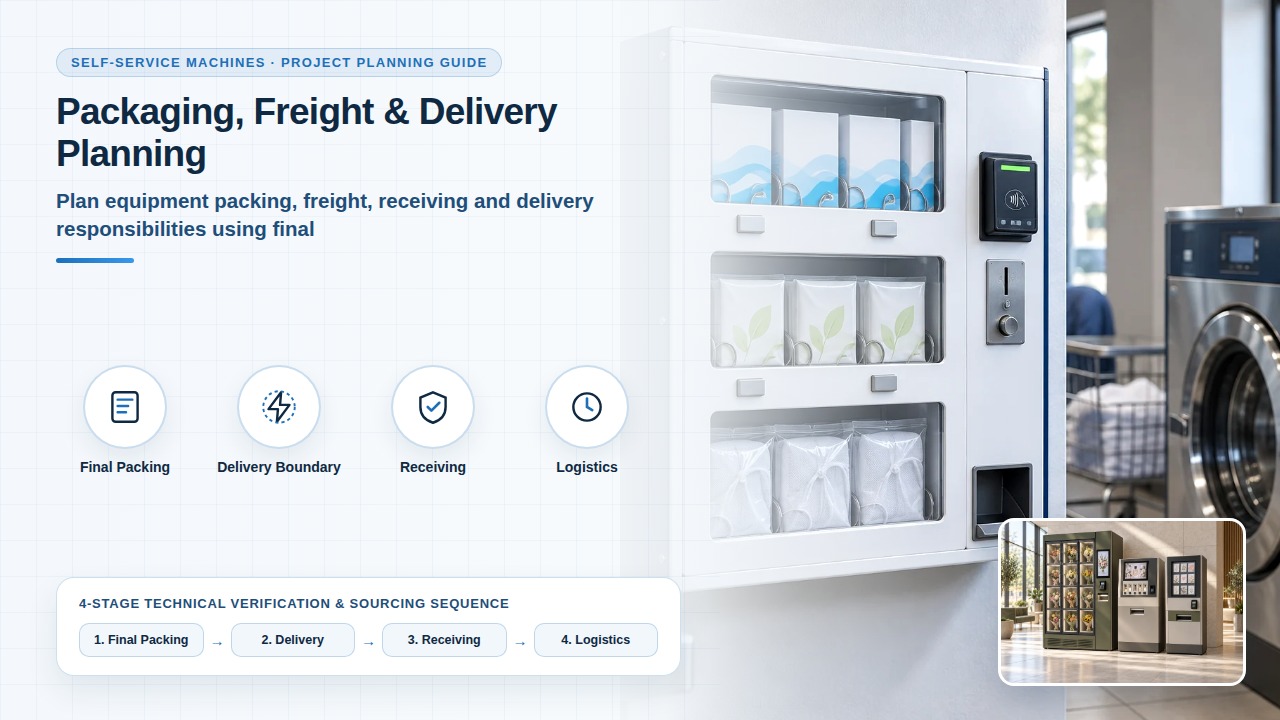
Use the final packing information
Request packing dimensions, gross weight, number of packages and handling information for the equipment configuration that will actually ship. Do not calculate a final transport arrangement from a photograph or another model's cabinet dimensions. Changes to options, stands or packaging can affect the shipping inputs and should be reflected in the revised records.
The packing record for the configuration that will ship is the input every later freight comparison uses.
Project review sequence
Packing, transport, receiving, installation
- P. Packing. Named in scope: Packed size, weight, count, unit. Separate duty: Cabinet size stays outside.
- T. Transport. Named in scope: Stages, documents, exclusions. Separate duty: Unnamed local stages.
- R. Receiving. Named in scope: Count versus packing list. Separate duty: Installation acceptance.
- I. Installation. Named in scope: When delivery scope names it. Separate duty: Positioning and connections.
Clarify the delivery boundary
State the destination and the delivery responsibilities you want quoted. Ask the proposal to identify its trade terms, included transport stages, documentation and exclusions. Confirm which party handles the local stages and access to the receiving site. Destination service, clearance and site delivery are included when the freight scope names them.
All transport quotations use the same final packing inputs and a clearly stated delivery boundary.
Site Preparation & Installation Responsibilities — Next step after this delivery boundary is named: record delivery access, positioning, utilities, site works and handover checks separately from the freight record.
Self-Service Machine Site Survey Checklist — Input for the access limits on this delivery boundary: record the delivery route, access dimensions and restrictions before they are treated as part of the freight price.
Plan receiving and exception records
Identify who will receive the shipment and compare the delivered packages with the packing list. Agree the evidence required for visible damage, shortages or other exceptions and the channel for reporting them. Receiving equipment is distinct from completing installation or accepting all operating requirements; the project should state which checks take place at each stage.
A receiving signature records the delivered packages against the packing list and does not close installation acceptance.
Equipment Cost vs Total Installed Project Cost — Next cost step after this receiving record: compare packing, transport and handling with installation on the total installed cost, using the final packing record rather than a cabinet size.
Separate logistics from installation and support
List positioning, site connections, commissioning, local labour and ongoing support separately from transport. Describe access restrictions and any equipment needed to receive or move the shipment.
Applicable scope: a shipping price includes only the transport stages, documentation and exclusions the quotation names, using the final packing record. Positioning, site connections, commissioning, local labour and support stay on separate lines unless the delivery scope names them.
Frequently asked questions
If packing changes after a freight quotation, does the freight record need to be updated?
Yes. A change to options, stands or packaging can change the shipping inputs, so the revised packing record replaces the earlier dimensions, gross weight and package count. Later transport quotations use that same final packing record and the stated delivery boundary. The total-cost comparison uses the final packing information for packing, transport and handling, and it keeps a preliminary freight indication separate from a complete landed project cost.
Are unloading and positioning included in the shipping price automatically?
No. Positioning, and the equipment needed to receive or move the shipment, are listed separately from transport. Destination service, clearance and site delivery are included when the freight scope names them. The installation review names who provides positioning, fixing and commissioning, and those items stay outside the shipping price unless the delivery scope names them.
Does signing the receiving record complete installation acceptance?
No. Receiving compares the delivered packages with the packing list and records visible damage, shortages or other exceptions. That record is distinct from completing installation or accepting operating requirements. Installation acceptance uses the checks named for the agreed installation scope: equipment identity, configuration, the user sequence, routine maintenance access, and outstanding items.