

Frozen Vending Temperature & Fault Checks
Record the alert, sales restriction and stock decision as separate frozen-vending checks. A sales decision for affected products is recorded separately from the cabinet alarm and any cleared fault.
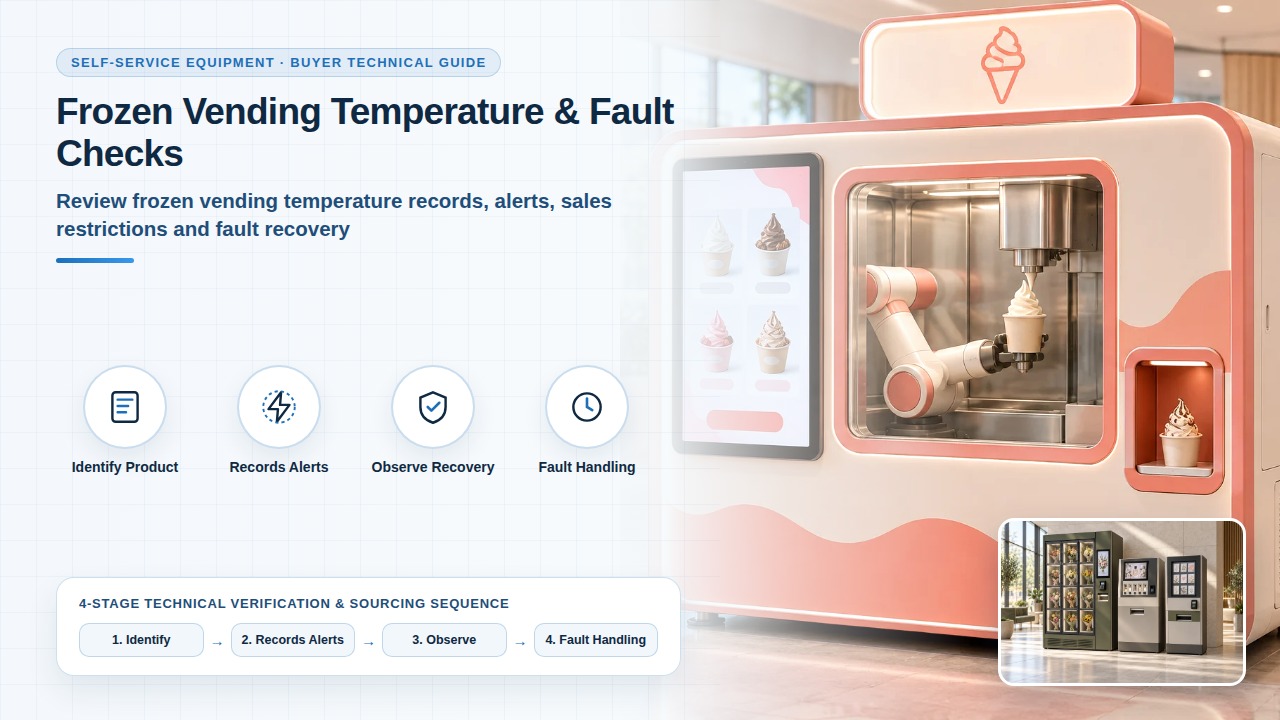
Identify the product and required evidence
Record the actual packaged frozen products and their documented handling requirements. Ask what the offered configuration monitors, where its measurements are taken and what information an operator can retrieve. A displayed cabinet value is one observation in the product-condition record. Storage and release limits come from the product handling documents and the configuration under review.
Ice Cream Vending Machine Project Options — Use this page to decide whether the temperature and fault record belongs to packaged frozen sales or to a separate soft-serve preparation route.
Project review sequence
Review records, alerts and sales restrictions
Request a demonstration of the available records and relevant fault indications for the exact controller and software. Identify whether information is local or remotely available and who receives it. Tie each expected response to evidence and assign manual checks where the proposed system provides no information.
Packaged Ice Cream vs Soft-Serve Vending — Use this comparison to decide whether the storage, interruption and operator record is for finished frozen packages or for on-site preparation.
Alarm, sales, recovery and stock
Observe recovery through an agreed test method
Ask our engineering team to define a supported method for assessing interruption and recovery behaviour. Record the state before the test, the customer indication, sales availability and the state after restoration. Do not bypass protections or create a hazardous test condition. Distinguish restarting equipment from deciding what to do with affected stock.
Keep fault handling in the acceptance record
List unresolved cases, required changes and retest references alongside successful demonstrations. Include the support contact and the operator’s procedure for marking equipment unavailable. A procurement assessment should verify the stated behaviour without turning a cabinet claim into an unsupported product-safety assurance.
Frequently asked questions
Does a normal screen mean every stock item is in normal condition?
A normal screen is the displayed cabinet value, and that value is one observation in the product-condition record. Storage and release limits come from the product handling documents and the configuration under review. For packaged ice cream, assess the finished products planned for the machine. Soft-serve preparation keeps a separate record of ingredients, preparation, cleaning and interruptions.
Does an alarm always stop sales?
The sales status is the restriction the exact controller and software demonstrate. Record whether the alert is available locally or remotely and who receives it. On the ice cream project review, ask what the customer and operator see when the machine cannot maintain the required condition, and how that configuration prevents unsuitable continued operation.
After a restart, who decides what happens to the stock?
The named operator or specialist decides what to do with the affected stock and keeps the documented basis for that decision. Restarting the equipment is recorded separately as the state before the test, the customer indication, sales availability and the state after restoration. For the packaged or soft-serve route, name the people responsible for supply, replenishment, inspections and technical service.