

A FROZEN TREAT, A CHOSEN OPERATING ROUTE
Ice Cream Vending Machine Project Options
Configure packaged frozen-product vending around packaging fit, storage conditions and replenishment. Review soft-serve preparation separately for ingredients, cleaning, utilities and local operation.
For operators assessing equipment, site requirements and local support.
Share your machine configuration and operating requirements with our team.
Explore the details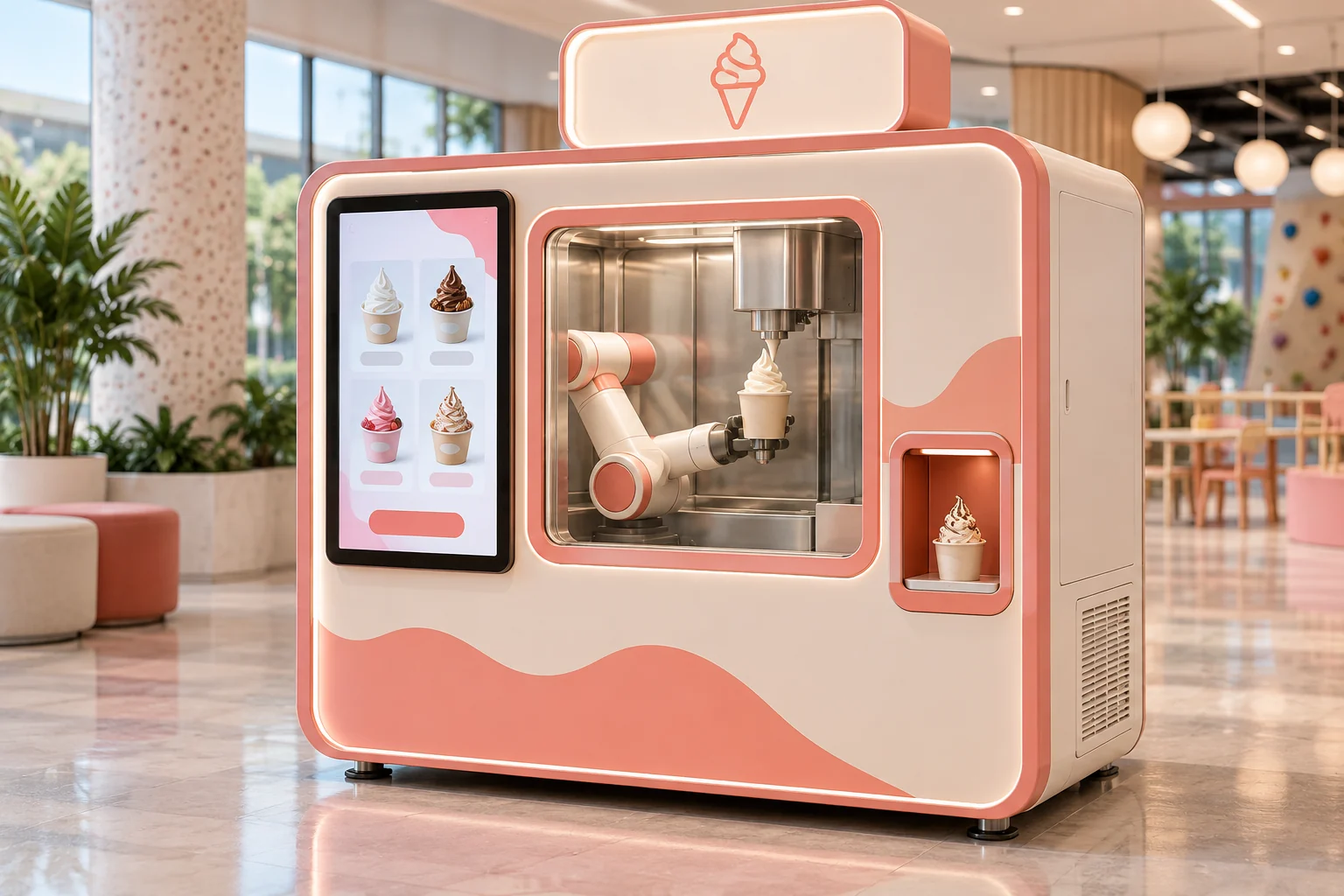
- Packaged or soft-serve route
- Cold-chain review
- Daily care planning
FROM IDEA TO CONFIGURATION
Choose the dessert experience before the machine.
- Choose the dessert format
- Review storage and serving
- Validate cleaning and fault response
POSSIBLE SETTINGS
Indoor leisure venues
Retail destinations
Visitor attractions
01
Packaged Frozen Products vs Soft-Serve Production
Separate the sale of pre-packaged frozen products from making soft-serve ice cream at the machine. The initial route prioritised for assessment is packaged-product vending. On-site production requires a different review of ingredients, preparation, cleaning and local operation and is not established by a successful frozen-package vending demonstration. If both are under consideration, keep the product and operating requirements separate so that evidence and quotations for one are not mistaken for support for the other.
The opening figure is a concept illustration and is not a supplied configuration. Confirm the selected layout in the project drawing.
Packaged Ice Cream vs Soft-Serve Vending — Compare packaged ice cream vending and soft-serve proposals by product handling, preparation, cleaning, local staffing and acceptance evidence.
02
Product Fit, Cold Storage & Dispensing
Packaged frozen products: put the final packaging and the pickup on file. Name the products and package dimensions, including shape, weight and any fragile features, then record release and collection, including product condition and failed cycles.
Soft-serve preparation: put the ingredients, portions and preparation sequence on file, together with the model cleaning documents. A package-fit test stays with the packaged route. Review the proposed equipment against the route that will operate, including the operator tasks between customer sessions.
03
Temperature Control and Fault Handling
Request the documented operating range, sensing arrangement, records and fault response for the proposed model. Ask what the customer and operator see if the machine cannot maintain the required condition and how the system prevents unsuitable continued operation. The acceptance record includes the documented operating range, the sensing arrangement and the fault response for the proposed model. The operating range for the offered model is read together with the product requirements and the site conditions.
Frozen Vending Temperature & Fault Checks — Review frozen vending temperature records, alerts, sales restrictions and fault recovery against the actual products and machine configuration.
04
Cleaning, Consumables & Local Service
Packaged frozen products: the local file is the final package and the pickup, plus the person who replenishes that package and responds when collection stops.
Soft-serve preparation: the local file is the ingredients, the preparation sequence and the model cleaning documents, plus the person who carries out that cleaning and handles an interruption. Settle those named responsibilities before an equipment proposal is treated as complete.
05
What Must Be Verified Before Quotation
A configuration quotation needs an identified model, the chosen product route, compatible products or ingredients and an agreed operating scope. Request the relevant equipment documentation, demonstration evidence and the local review needed for food operation and installation. Missing evidence should remain visible in the proposal. For on-site preparation, confirm the ingredients, cleaning requirements and operating demonstration before selecting equipment. Commercial terms follow the reviewed configuration, not the category label. Supply stays with that reviewed route.
06
Submit a Frozen Vending Project Brief
Submit the country, site, quantity plan and the packaged or on-site-production route. Include a written product or ingredient summary and describe who will replenish, clean and service the equipment. If the project is a trial, identify the technical and operating decisions it needs to resolve. We use these inputs to prepare the configuration, operating checks and commercial proposal, with destination requirements reviewed for the actual installation.
Frequently asked questions
Can a packaged demonstration prove soft-serve function?
A successful frozen-package vending demonstration does not establish on-site soft-serve production. Soft-serve preparation is a separate review of ingredients, the preparation sequence, the serving format, cleaning and the work performed locally. Use representative packaged products to assess loading, release, collection and condition for the packaged route. For preparation equipment, request evidence for the complete proposed process, consumables, cleaning and servicing. Package tests prove only the tested combination.
Is a temperature screen enough for acceptance?
A displayed cabinet value is one observation in the product-condition record. Acceptance also uses the documented operating range, the sensing arrangement, the records an operator can retrieve, and the fault response for the proposed model. Storage and release limits come from the product handling documents and the configuration under review. Ask what the customer and operator see if the machine cannot maintain the required condition, and how the system prevents unsuitable continued operation.
Who is responsible for local cleaning and an interruption?
Name the local people responsible for replenishment, cleaning, inspections and technical service, and record how an interruption is escalated. Tasks that depend on qualified local personnel stay with those people or the applicable operating procedure. Periodic remote contact does not replace local cleaning or qualified technical support. Restarting the equipment is a separate record from the decision about affected stock, and the responsible operator or specialist is named for that stock decision.