

BEAUTY RETAIL BEYOND THE COUNTER
Cosmetic Vending Machines for Packaged Beauty Retail
Match packaged beauty products to a suitable vending format. Share SKU dimensions, temperature needs and your retail site for a sourcing review.
For operators, commercial sites and equipment distributors.
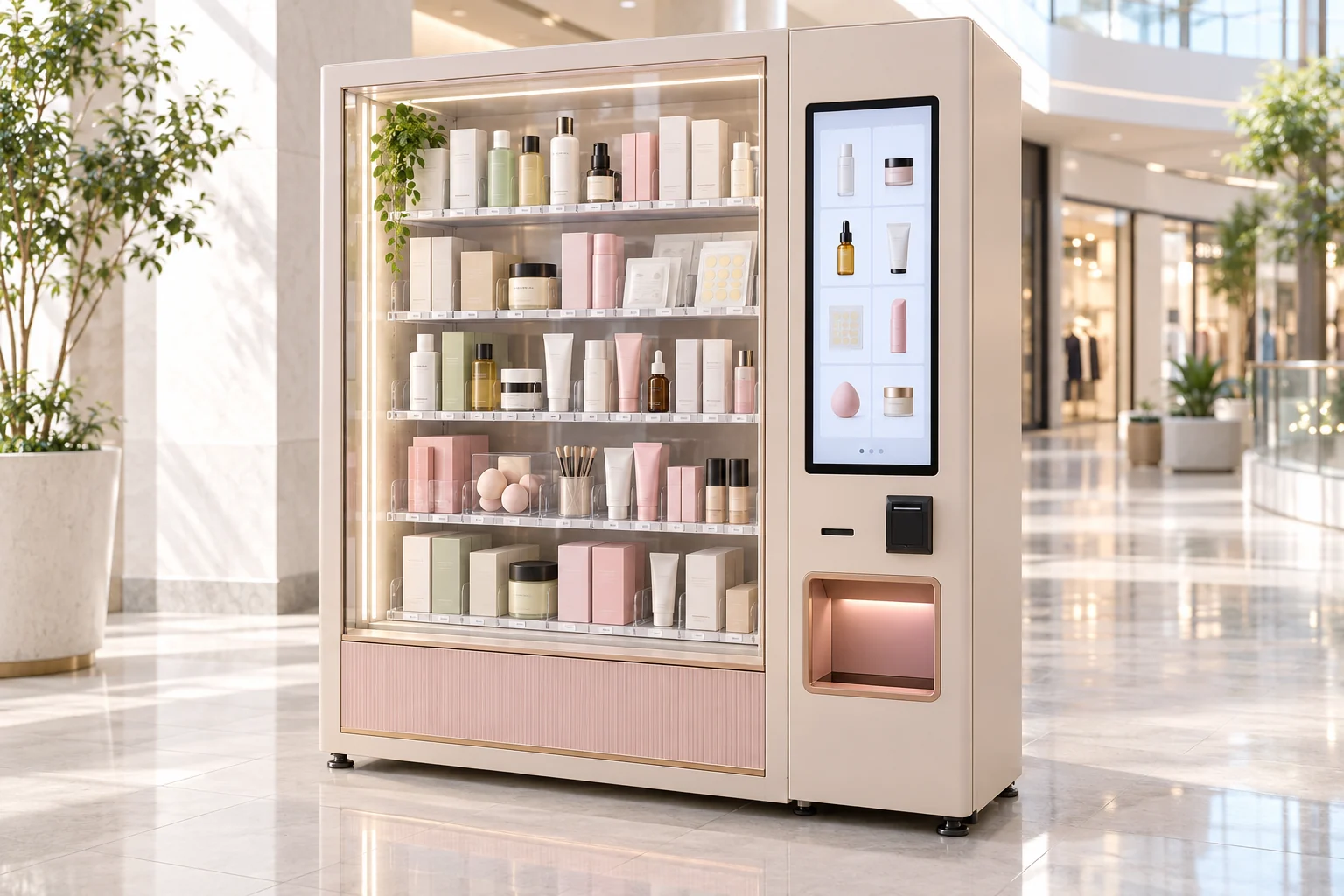
- Curated product display
- Fragile-pack handling
- SKU-level storage review
POSSIBLE SETTINGS
Shopping centres
Travel retail
Hotels and beauty venues
FROM IDEA TO CONFIGURATION
A curated beauty shelf, ready for self-service.
- Curate the product range
- Check packaging and storage
- Test checkout and collection
01
Packaged Beauty Products Only
This category starts with vending sealed, packaged beauty and personal-care products. Describe the actual sale units, such as a boxed item, bottle or pouch, and the product assortment you want to stock. On-site mixing and pay-per-spray fragrance dispensing are different operating routes and are not assumed features of a packaged-product machine.
If the project includes fragrance sprays as well as packaged goods, keep those requirements separate. The product-handling method and evidence needed for one route do not establish the capability of the other.
02
Build a SKU-to-Dispenser Fit List
Build a product list using the final retail packaging. Record dimensions, weight, shape, rigidity and any protruding cap, handle or hanging tab. Identify the products that are most difficult to release or collect, not just the items expected to sell most frequently.
Ask the supplier to match each sample to a proposed channel, tray or compartment and document the setup. Test loading, repeated delivery and customer collection. Packaging changes should trigger a fresh fit check instead of being treated as interchangeable with the original sample.
03
Fragile Goods & Storage Requirements
Identify fragile containers and record the storage conditions specified for each product. Ask how the proposed machine protects the product through its delivery path and how the installation will address relevant light or environmental exposure. Do not assume that all cabinets provide temperature control.
Request tests with the actual packaging and inspect the products after repeated cycles. If cooling or another environmental feature is proposed, obtain model-specific evidence and clarify its limits. This category listing does not guarantee unbroken delivery or establish a storage range for your assortment.
04
Retail Placement & Stock Rotation
Describe the retail location, access hours and the person responsible for replenishment. Plan how product condition, expiry information and stock rotation will be checked. The operator also needs a way to identify empty selections and prevent displayed descriptions from becoming inconsistent with the loaded products.
For a pilot, record replenishment visits and the reasons products are removed or unavailable. The machine does not replace the retailer's responsibility for merchandise management. Stocking frequency should be based on the actual assortment and operating observations rather than an assumed universal capacity.
05
Branding, Payment & Scope of Supply
Separate the machine graphics from the brands and images used to sell the products. Confirm who holds the necessary permissions for each. A branded cabinet design does not establish that the equipment supplier is an authorised seller or licensee of the merchandise.
State the required display language and payment route. Confirm local merchant onboarding and the handling of failed deliveries. Request a quotation that distinguishes cabinet configuration, payment hardware, graphic production, packing, freight and support so the equipment scope is clear.
06
Discuss Your Product Packaging on WhatsApp
Start with a written product list, package dimensions, intended site and country, approximate quantity and purchasing window. Identify fragile products, special storage requirements and the staff who will replenish the cabinet. These inputs help determine which samples should be assessed first.
Use WhatsApp to discuss the product list and packaging details with our team. Agree which photographs or samples will help evaluate fragile containers, dispensing and storage requirements. Do not treat submission of a product list as a successful compatibility test; the proposed equipment and final packaging still need to be reviewed together.
LET’S REVIEW YOUR PROJECT
Review your configuration
Share your equipment requirements, location, quantity and operating arrangements.