

PHONE ACCESSORIES, MADE PERSONAL
Phone Case Vending and Custom Printing Project Options
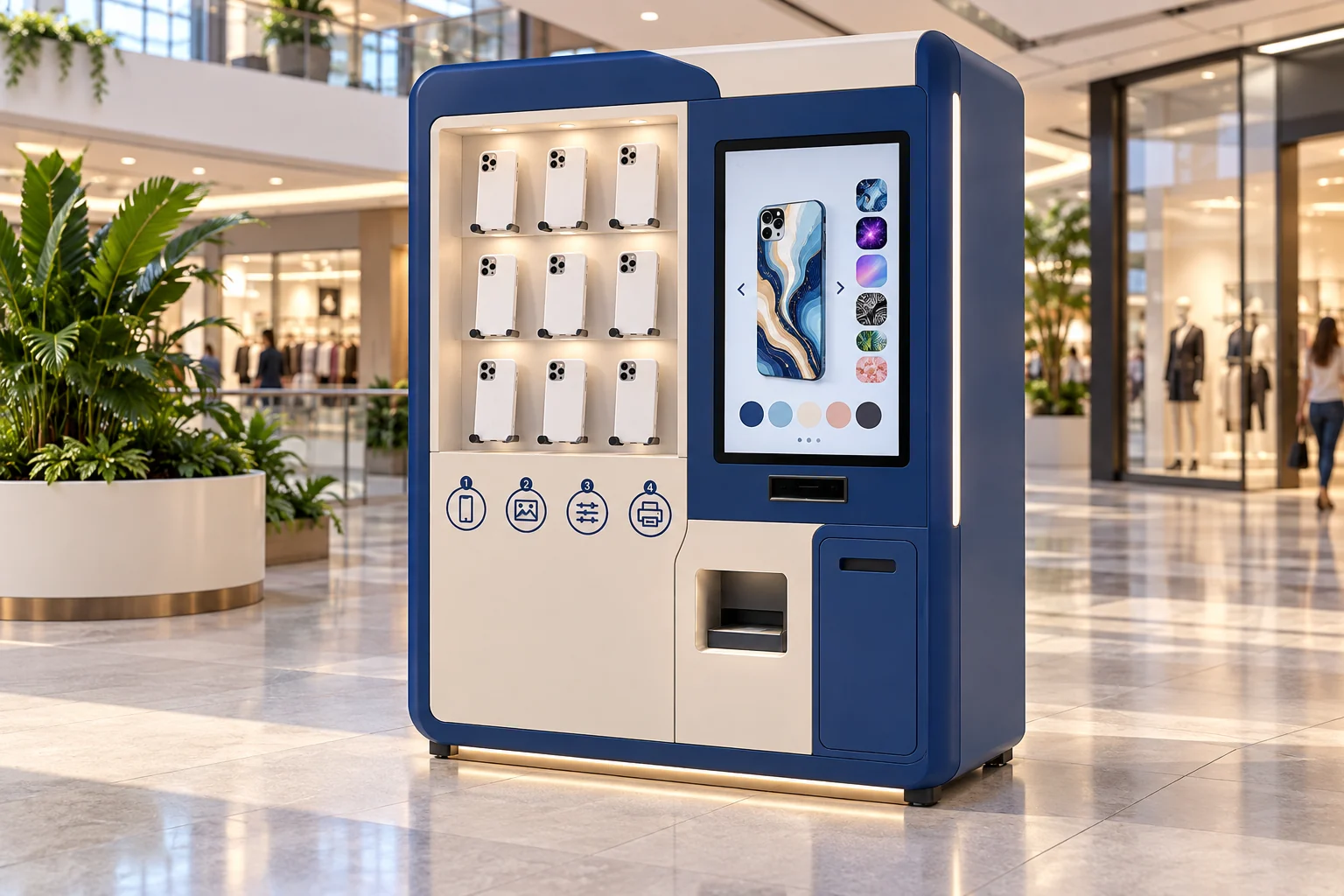
Choose ready-made case vending or on-demand printing. Submit supported phone models, case blanks and artwork workflow for feasibility review.
For operators assessing equipment, site requirements and local support.
- Ready-made or printed
- Device and blank matching
- Artwork workflow review
FROM IDEA TO CONFIGURATION
Turn a case choice into a retail experience.
- Choose the retail route
- Validate cases and artwork
- Test print-to-pickup performance
POSSIBLE SETTINGS
Shopping centres
Mobile accessory retailers
Travel and event venues
01
Ready-Made Vending or Print-on-Demand
Choose between vending ready-made phone cases and producing a personalised case after the customer places an order. Ready-made vending relies on stocked products and their delivery mechanism. On-site printing adds blank selection, artwork processing, production and completion checks. They are separate equipment routes within this procurement category.
Printing capability has not been established by a ready-made vending demonstration. If personalisation is required, treat it as a feasibility requirement until the proposed workflow and actual machine have been tested with suitable blanks and artwork.
02
Supported Models, Blanks & Inventory
List the phone models, case variants and sale packaging required at launch. For ready-made vending, describe the stocked unit and replenishment plan. For printing, identify the blank case, material and model reference that the production system would need to select.
Ask who maintains the supported-model list and how discontinued or unavailable cases are removed from the customer selection. Request demonstrations with representative case samples. A supplier's broad model claim does not replace a verified list tied to the blanks, inventory and software in the proposed configuration.
03
Artwork Upload & Printing Workflow
For a printing route, map the sequence from artwork submission to preview, customer confirmation, processing, printing and collection. Ask which steps are supported by the proposed system and which require an operator. Include file rejection, incorrect model selection and an interrupted job in the demonstration plan.
Clarify how artwork is retained and deleted, who can access it and what the customer is told. Do not send confidential designs or account credentials in an initial WhatsApp message. The proposed machine's file-handling and any finishing process require their own evidence.
04
Consumables, Throughput & Serviceability
Measure an end-to-end operating cycle rather than relying on the speed of one printing step. Record successful jobs, rejected results, replenishment interruptions and operator interventions during a representative test. The result should state the case material, artwork conditions and configuration used.
Ask for the consumable list, replacement procedures and local maintenance requirements. Identify any dependency on proprietary blanks, ink or software. Throughput and waste levels remain unverified until demonstrated; they should not be presented as guaranteed performance or used as the sole basis for a rollout plan.
05
Configuration vs New Development
Separate documented standard options from cabinet changes, software integration and new development. A request for another case type or a different artwork workflow may affect more than the outer cabinet. Identify each requirement, the evidence already available and the work needed to close the gap.
A feasibility brief is not acceptance of a development project. Ask for an explicit scope covering hardware, software, test samples, deliverables, ownership and ongoing support before comparing commercial proposals for printing or other substantial modifications.
06
Submit Case Samples and Project Requirements
Submit the country, site, expected quantity and the ready-made or printing route. Include the phone-model list, case samples available for testing and any relevant retail or distribution experience. Existing access to a consumer-electronics channel does not by itself establish equipment supply or printing capability.
Begin the WhatsApp conversation with your written requirements and distinguish vending from printing. Agree which case samples, artwork examples or machine images are needed for the next review. Describe the trial outcome you need to evaluate, the purchasing window and the team expected to handle local replenishment and maintenance.
LET’S REVIEW YOUR PROJECT
Build your project brief
Describe the operating route, expected demand, site utilities, destination and local support arrangements.