

REFILL ACCESS FOR EVERYDAY ROUTINES
Water Vending & Refill System Project Assessment
Define a water refill vending project around source water, treatment scope, containers and maintenance. Submit site details for feasibility review.
For operators assessing equipment, site requirements and local support.
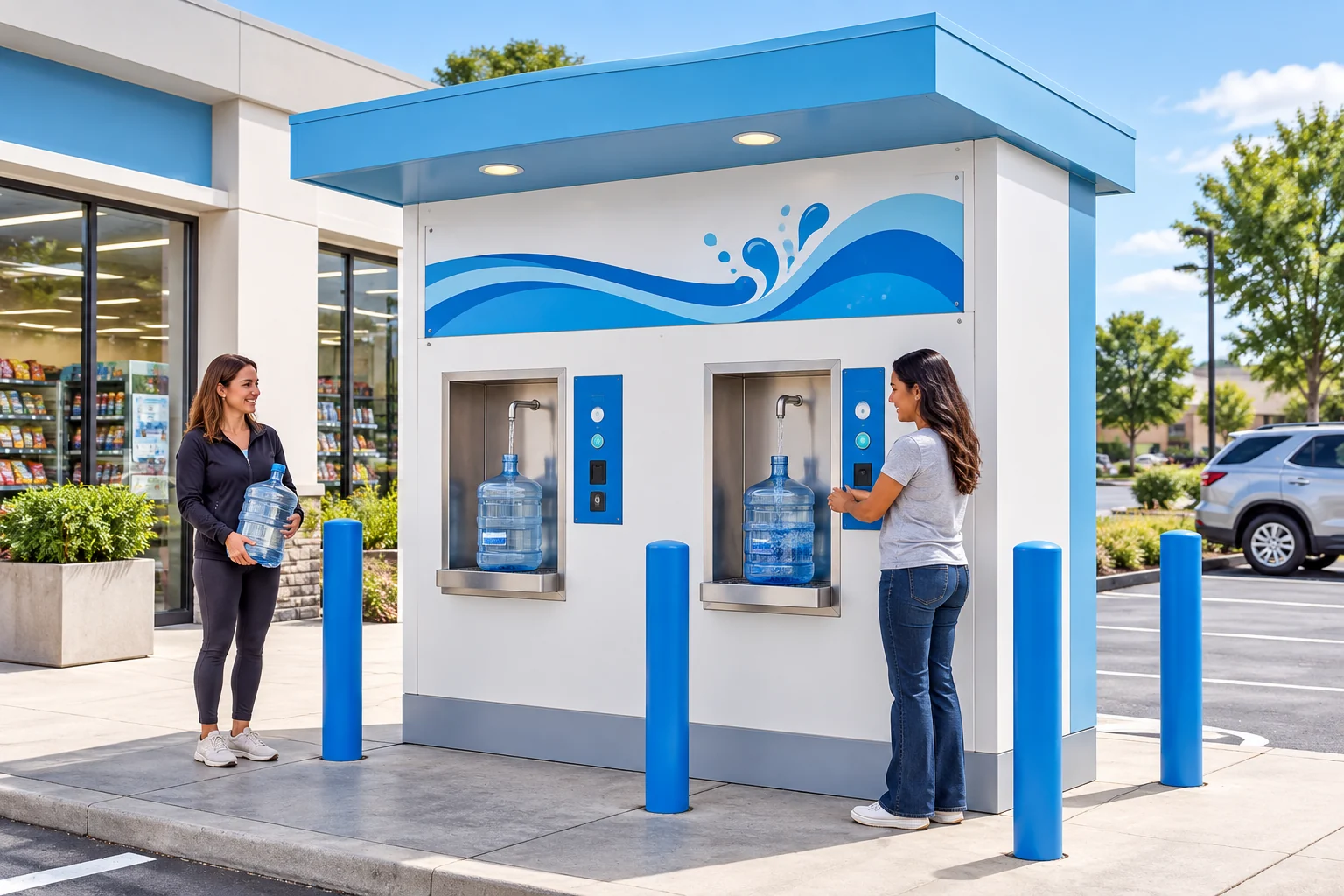
- Reusable-container workflow
- Source-water assessment
- Named maintenance ownership
POSSIBLE SETTINGS
Neighbourhood retail
Community refill locations
Campsites and service areas
FROM IDEA TO CONFIGURATION
Plan the refill point from source to container.
- Assess the source water
- Plan containers and payment
- Validate servicing and water-quality checks
01
Refill Vending vs Bottled Water Retail
This category concerns dispensing water into a customer's container. Selling sealed bottles is a packaged-product vending task and belongs in a different configuration review. A combined ice-and-water project should also identify the ice production or packaged-ice route instead of assuming that every function is included in a water terminal.
Describe the customer's container, intended purchase and collection sequence. The first assessment is the operating route and division of responsibilities, not a claim that a particular machine or water-processing system is already suitable for the site.
If customers will also buy ice, compare the ice-vending route before settling the equipment boundary. The review must account for how ice is produced or replenished, stored and released, alongside the separate container-filling task. Keep the water-only assessment focused on the source, treatment boundary, metering and refill operation.
02
Source Water and Treatment Boundaries
Identify the source water and the information available about it. Clarify whether the proposed supply is a dispensing and metering terminal, a treatment system or a defined combination. Ask for a diagram showing the equipment boundary, connections and the party responsible for each part of the process.
A cabinet description does not establish the quality of the water delivered. The project needs appropriate technical review and evidence for its actual source and intended use. Do not treat a generic filter list or a demonstration at another site as a water-quality guarantee.
03
Container Size, Metering & Payment
Specify the container sizes and the physical arrangement for placing, filling and removing them. Describe the desired selection and charging method, including any minimum or variable volume requirements. Ask for a demonstration of the proposed dispensing interface using representative containers.
Metering capability and billing should be checked together. Agree the test method, observations and acceptance criteria for delivered volume and interrupted fills. A displayed quantity alone does not prove the volume delivered or establish how an incomplete paid transaction is detected and resolved.
04
Hygiene, Filters & Maintenance Ownership
Identify who will be responsible for the site's testing programme, cleaning, filter or consumable changes and operating records. Ask the equipment supplier to provide the applicable documentation and maintenance requirements for the actual system. The operator needs a practical way to perform and record the agreed work.
Review the documented response to faults, loss of supply or an out-of-service condition, including when dispensing is prevented. This page does not prescribe a treatment or sanitation process and does not certify that a proposed installation meets local requirements.
05
Site Requirements and Procurement Inputs
Provide the country, site plan, available water connections, drainage, electrical supply and the expected usage pattern. State whether the project is a trial or a larger installation and identify the local team involved in assessing and maintaining the water system. Capacity requirements should be clearly separated from unverified equipment performance.
Before requesting a firm configuration quotation, define the proposed equipment boundary and the evidence still needed. Installation, testing, consumables, service and any required local authorisations should have identified owners in the project scope.
06
Submit a Water Vending Feasibility Brief
Submit the source-water information you can share, container formats, site, quantity plan and purchasing window. Identify the person responsible for the local technical assessment and routine operation. If the supply boundary is undecided, state which parts of treatment, storage and dispensing you expect to discuss.
Start with a summary on WhatsApp and agree which water-source reports or drawings are relevant to the proposed scope. Avoid sharing private records or treating preliminary information as verified test evidence. An enquiry opens a feasibility review; it does not confirm water quality, operating approval or equipment availability.
LET’S REVIEW YOUR PROJECT
Build your project brief
Describe the operating route, expected demand, site utilities, destination and local support arrangements.